




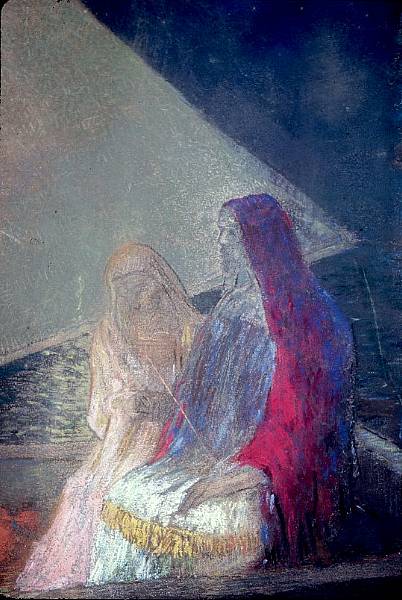
| Abrasions: | Loss of media (and often the support) caused by rubbing or scraping.
|
|
|---|---|---|
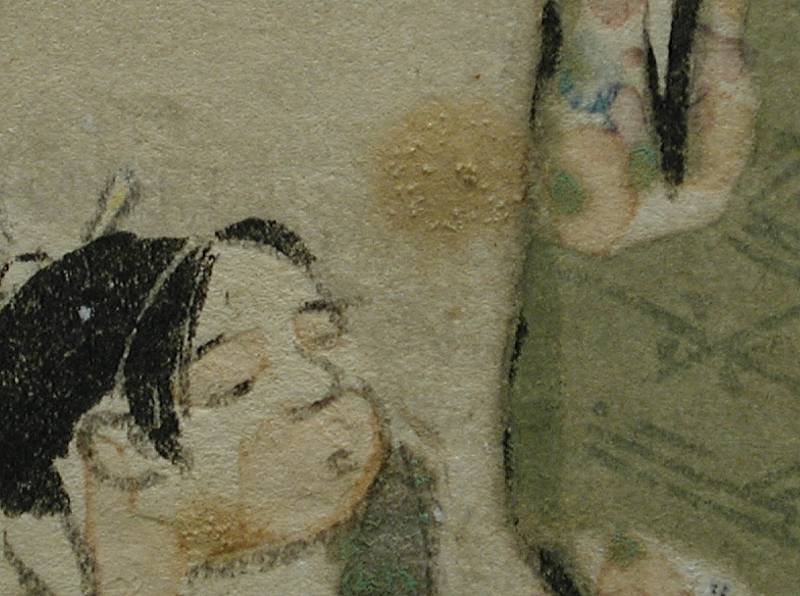
| Accretions: | An accumulation of extraneous matter on the surface of the artwork that alters the artist’s design, i.e. dirt, dust, grime, etc.
 |
|
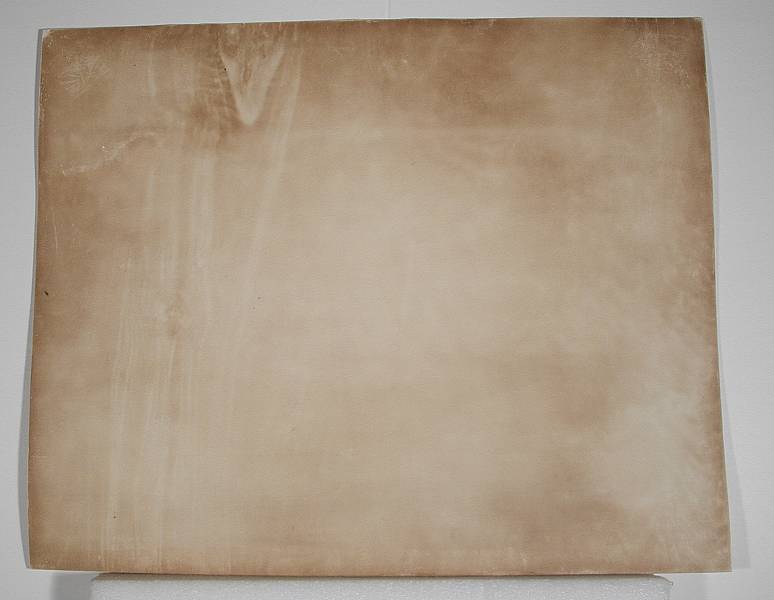
| Acidic Backboard: | Rear board upon which paper art is mounted, made of wood, wood pulp or other acidic materials which will seriously damage art paper.
|
|
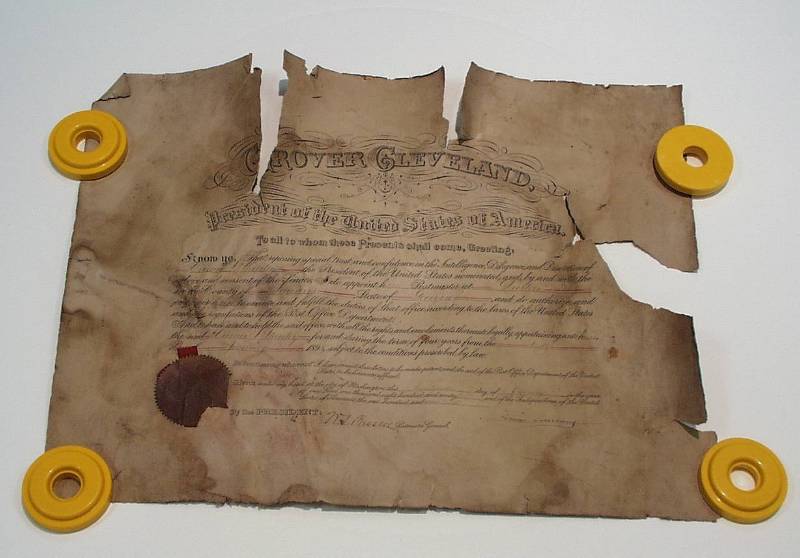
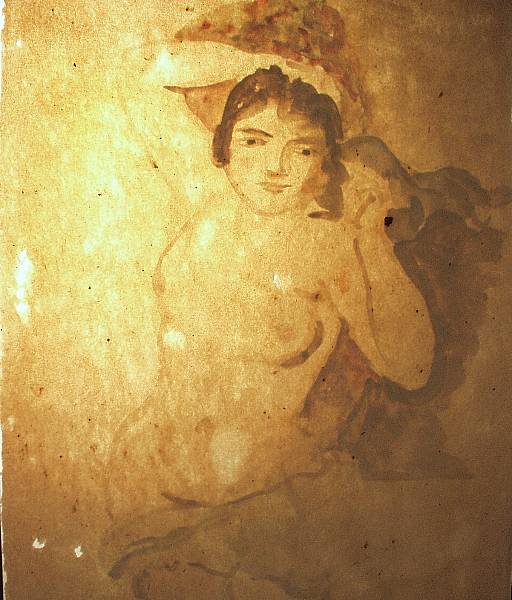
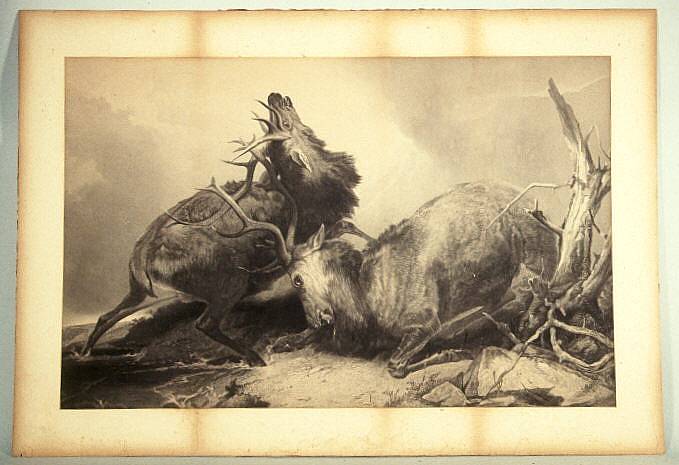
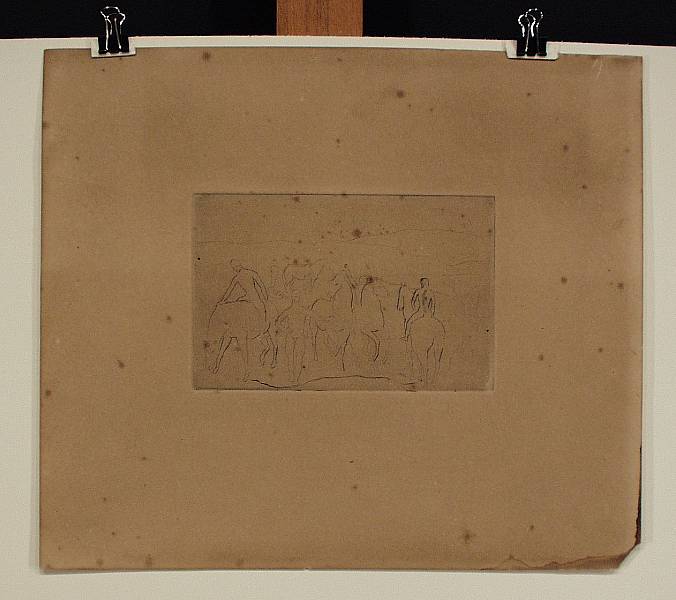
| Acid Burn: | Alteration to a work on paper (usually darkening – resembling burned paper) caused by lignin containing acidic materials in proximity to, or in contact with the art.
|
|
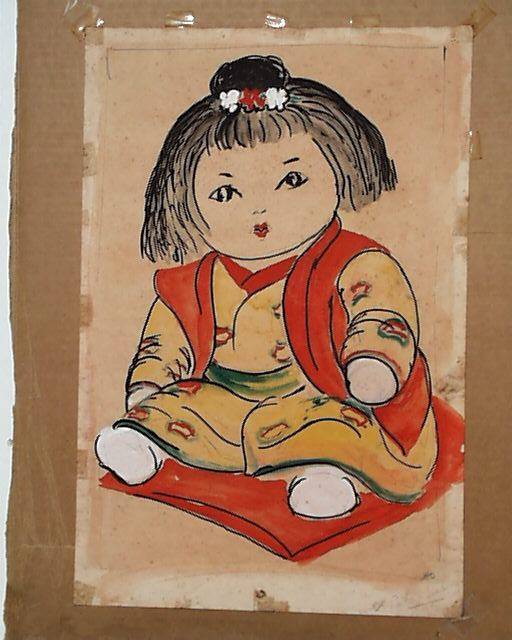
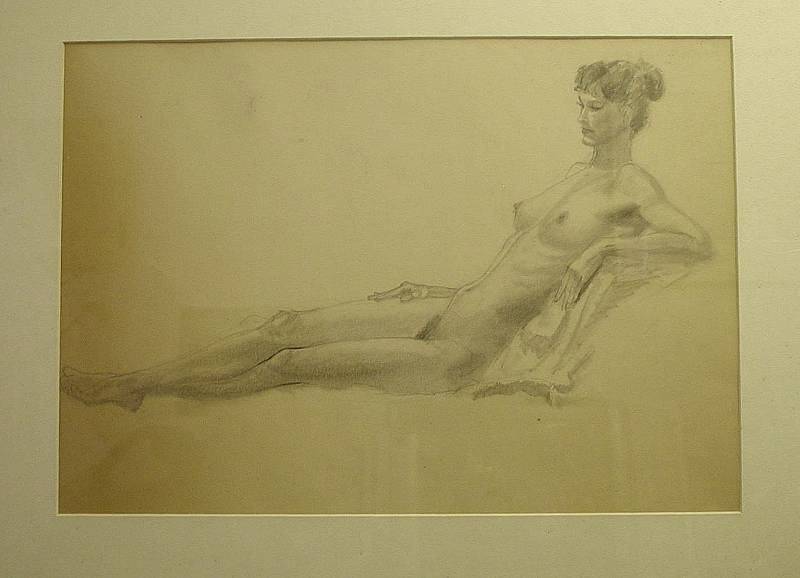
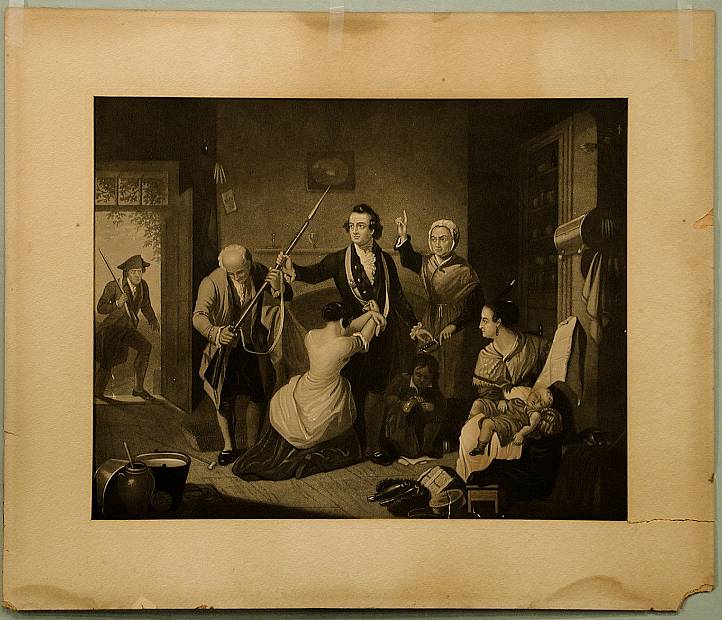
| Acidic Mat: | The border around a picture, between the picture and the frame made of wood pulp paper or other acidic material which will seriously damage the art paper.
|
|
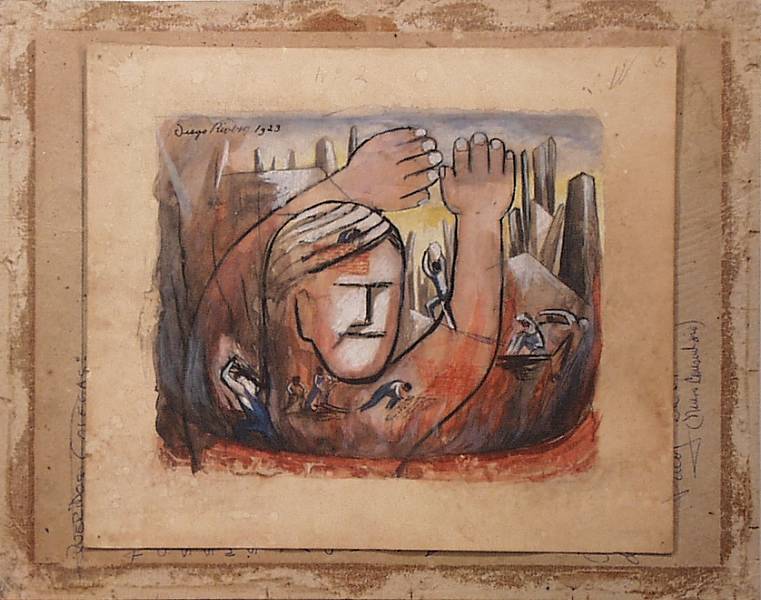
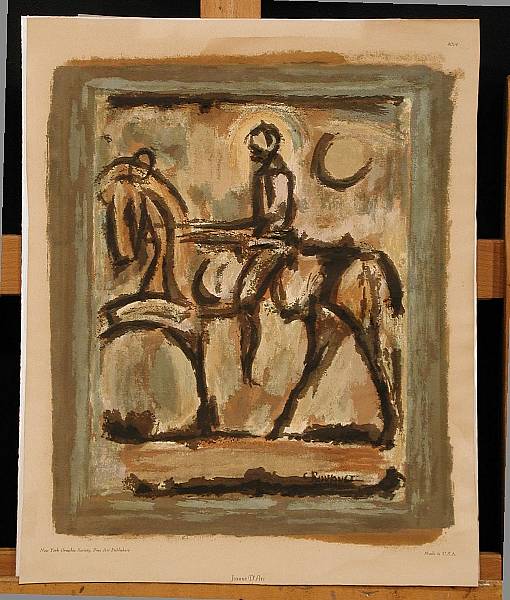
| Adhered to Backboard: | Paper adhered to a stiff board behind it; usually with glue or self adhesive tape.
|
|
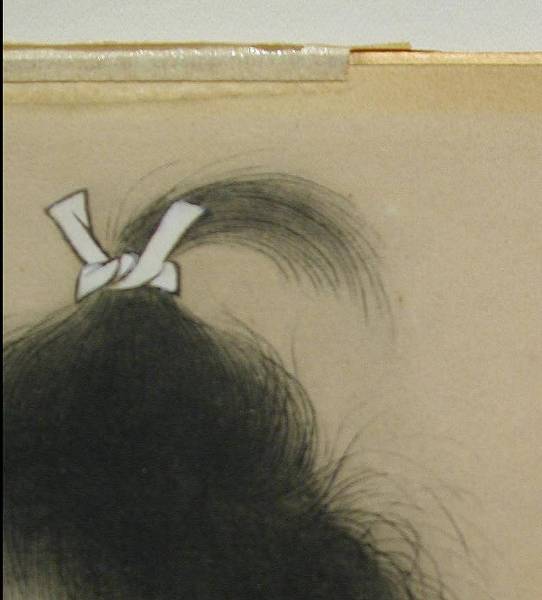
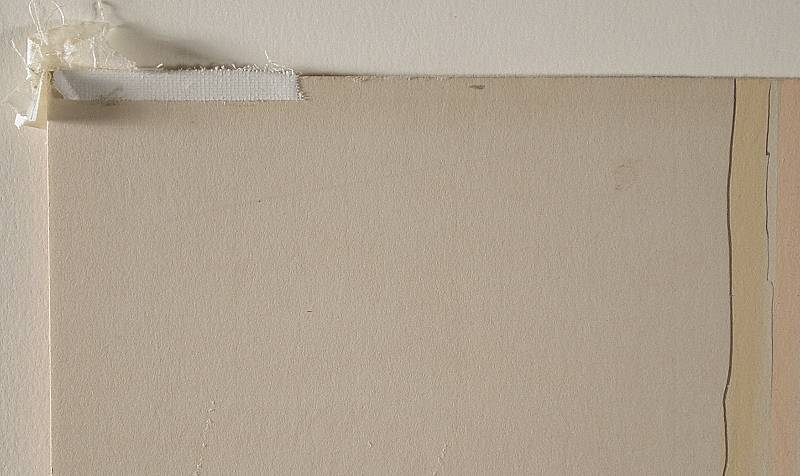
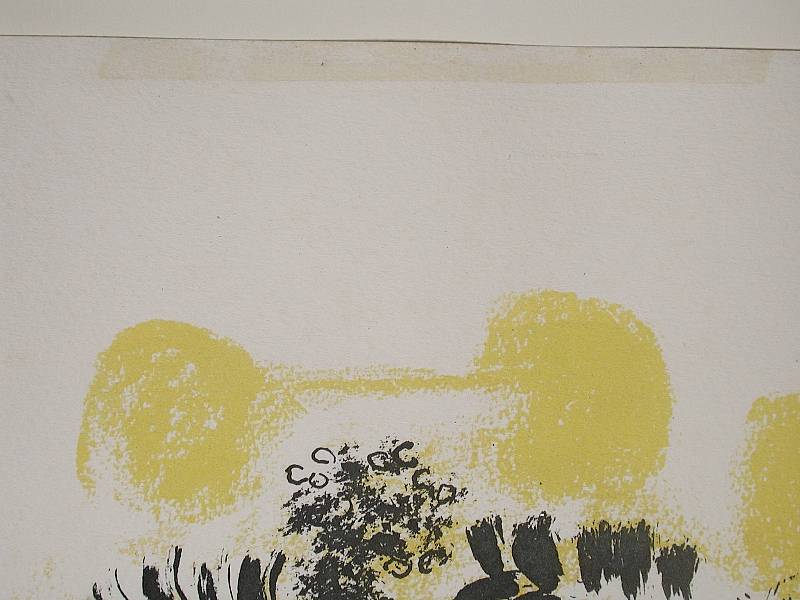
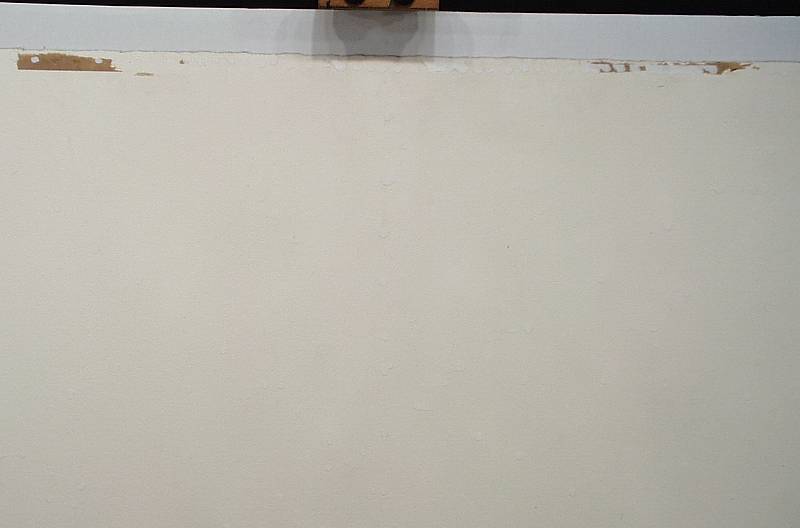
| Adhesive & Tape Residue: | Remains of adhesive left by previous application of paste, tape, glue, etc; generally occurs during inept mounting of the sheet.
|
|
| Auxiliary Support: | An attachment to the sheet to add strength and stability.
|
|
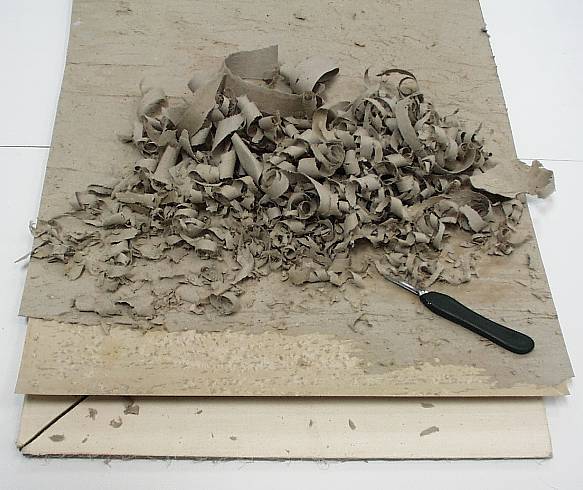
| Backing Removal: | Removal of a rear board (See Adhered to Back Board) to which a work on paper has been adhered. Removal can be wet, if the art can be immersed and the adhesive is water soluble, or dry with a scalpel if the work cannot be immersed in water.
 |
|
| Biological Degradation: | See “Mold/Mildew” and “Insect Damage”. | |
| Board: | A thin firm board made of compressed paper pulp, used as a support for drawing or painting.
|
|
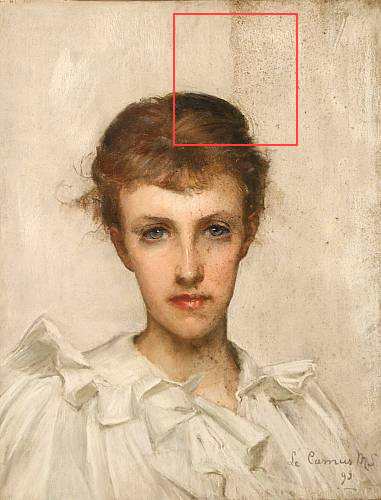
| Cleaning: | Removal of dirt, or other soiling; dry cleaning or wet cleaning (washing) are the two most common methods.
 |
|
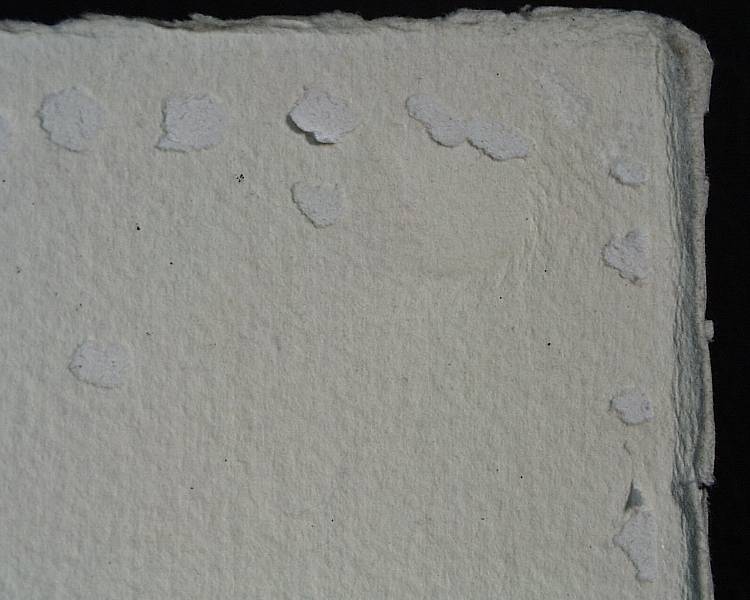
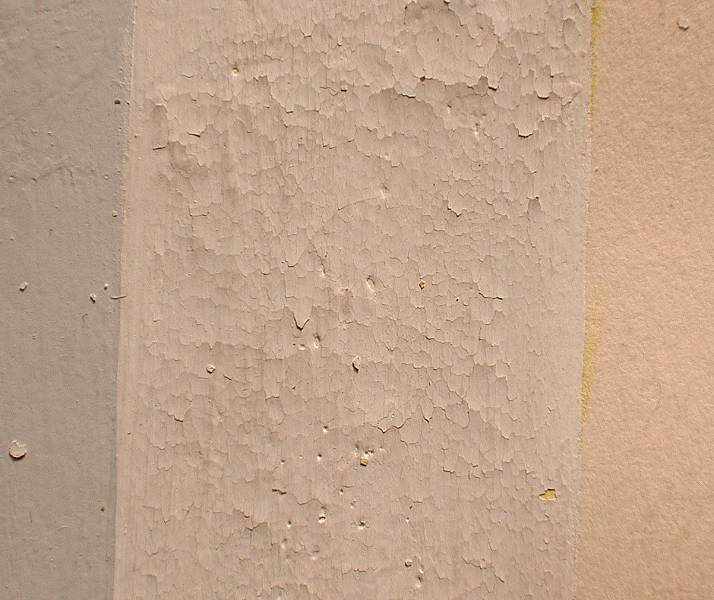
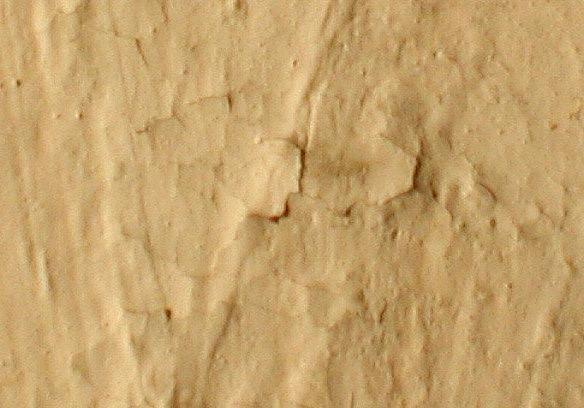
| Cleavage: | Separation and lifting of media (gouache, paint, etc.). From the support layer (paper, board, etc.).
|
|
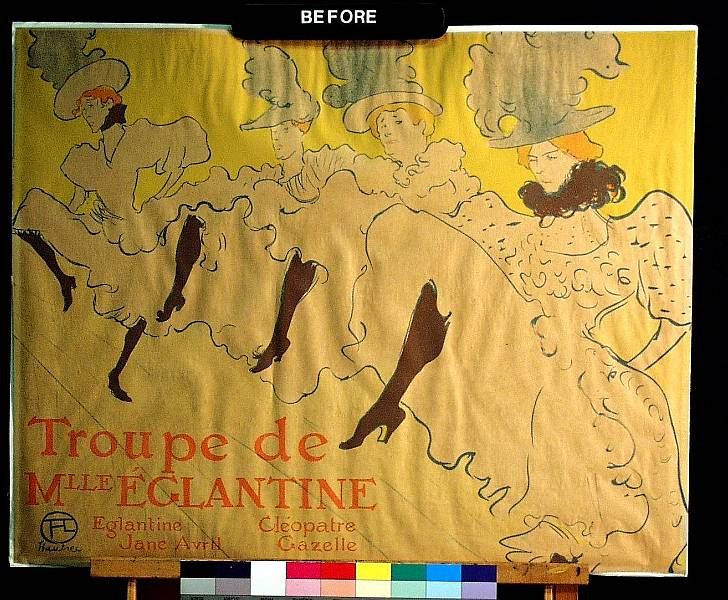
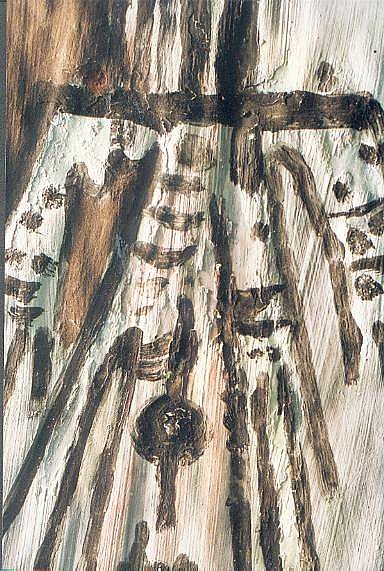
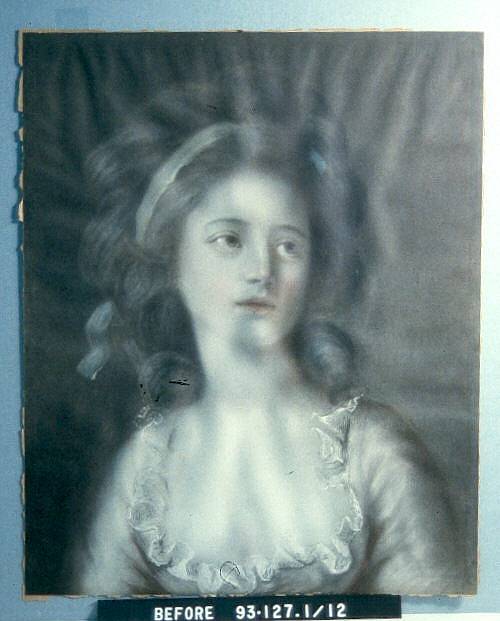
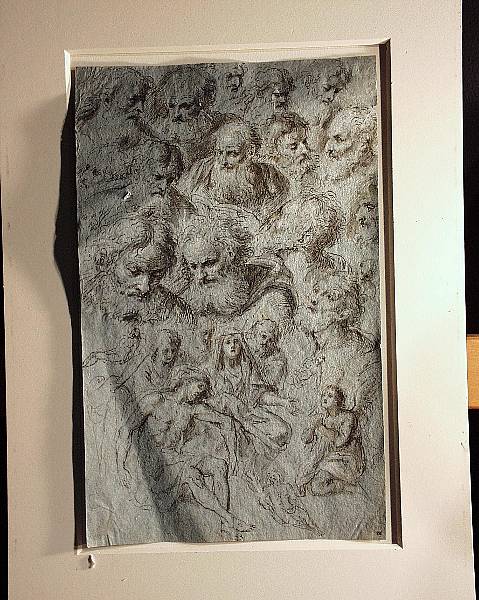
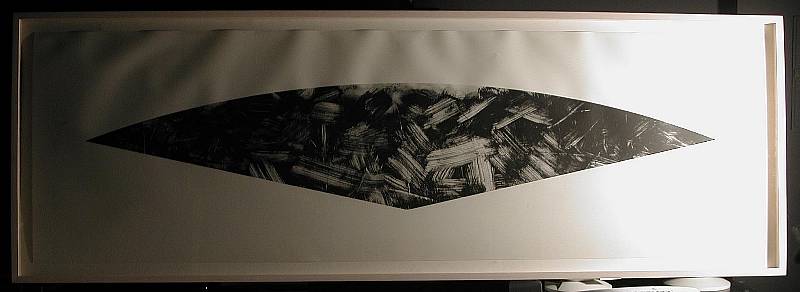
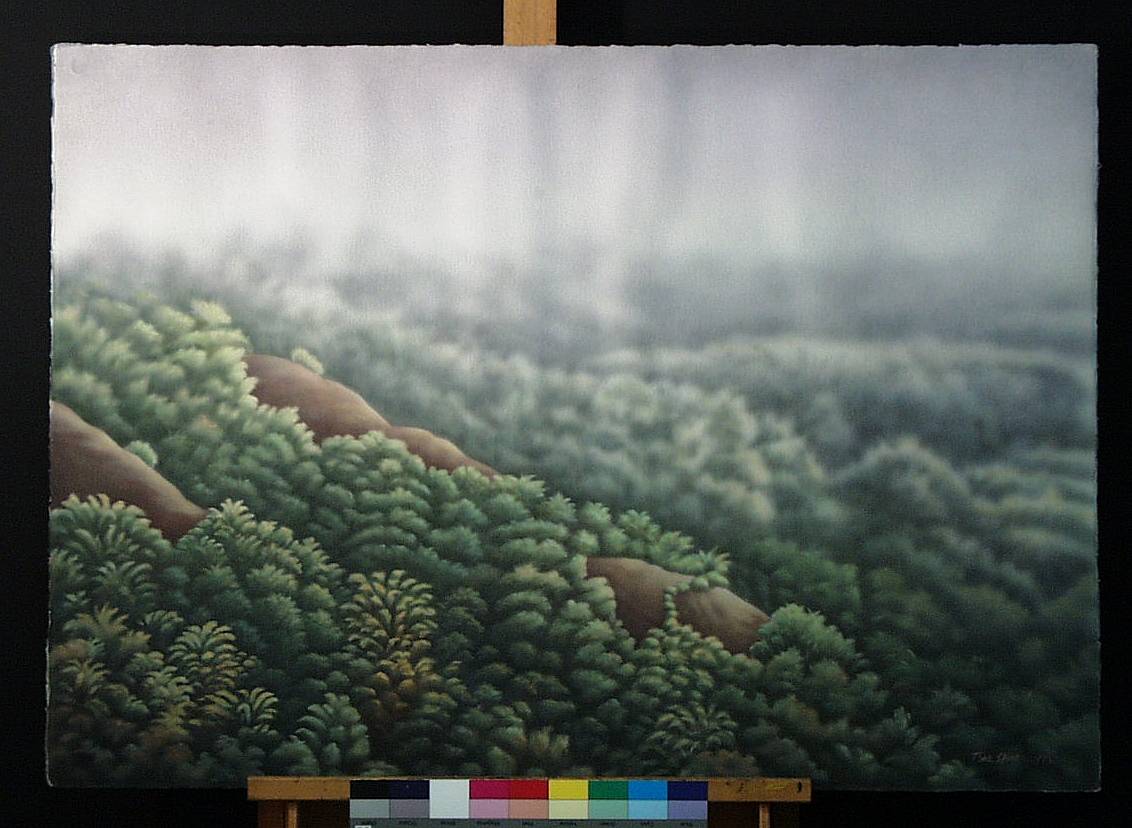
| Cockleing & Buckeling: | A wrinkle on broad system of wrinkles without creasing.
|
|
| Consolidation: | Procedure to re-adhere delaminating media to its primary support sheet on board. | |
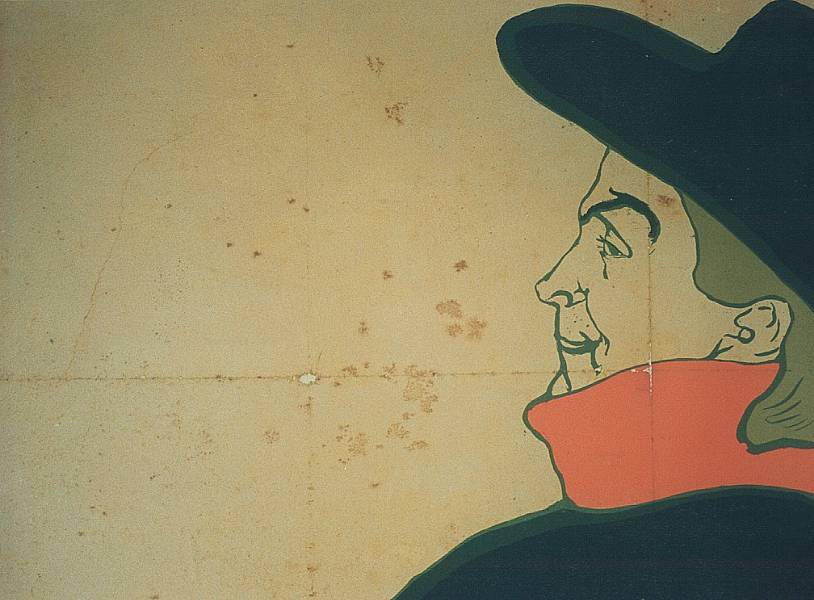
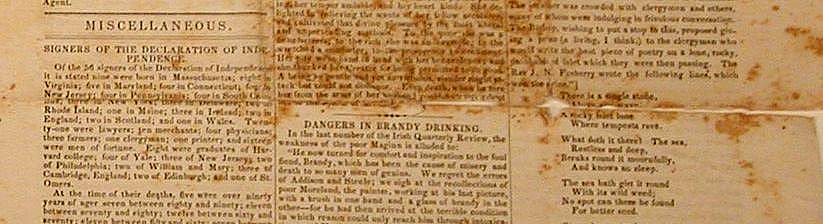
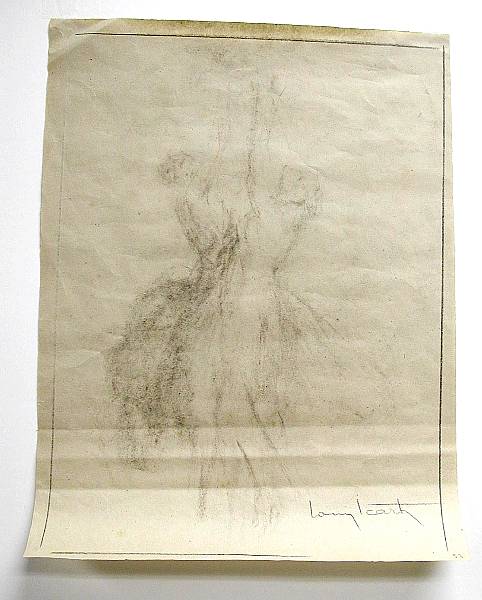
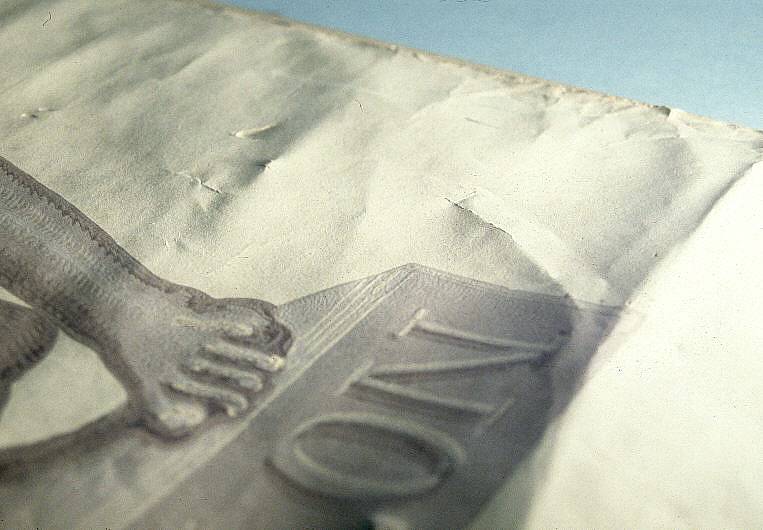
| Crease: | Line or mark made by folding or wrinkling.
|
|
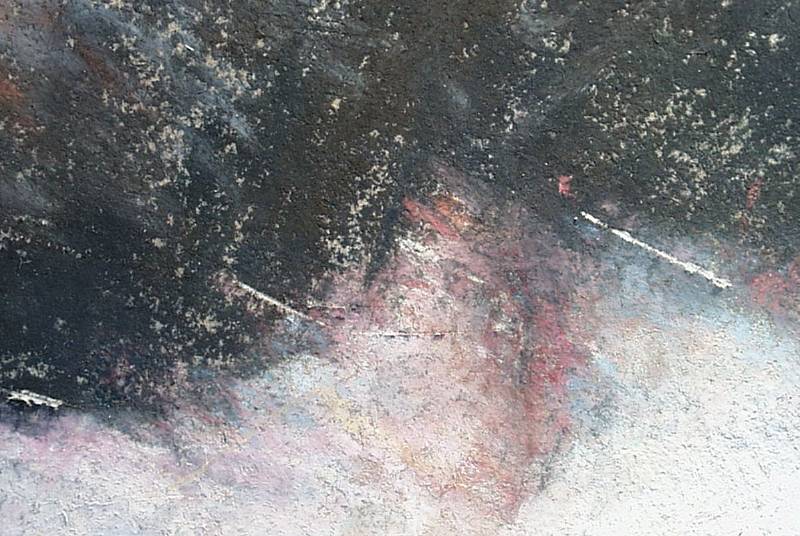
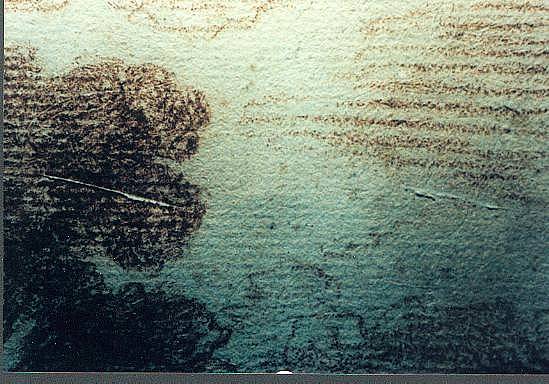
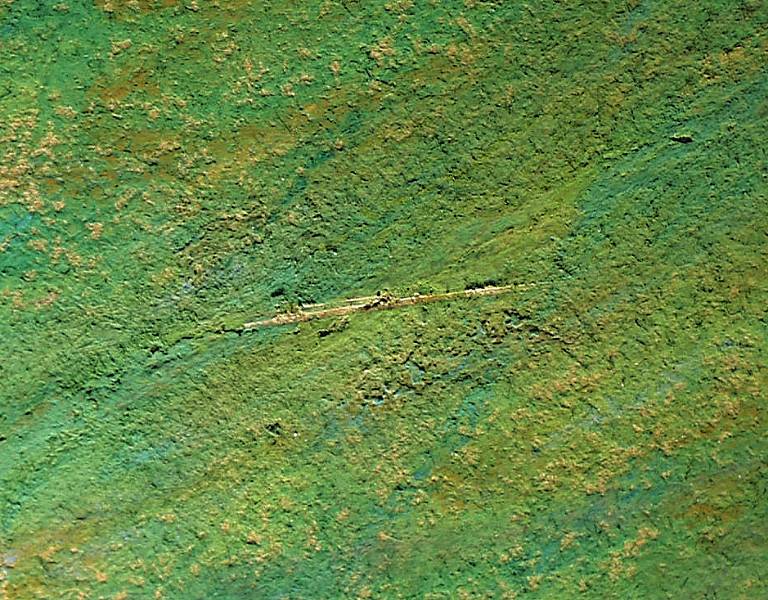
| Cut: | Straight separation in support caused by sharp slicing action.
|
|
| Deacidification: | Mitigation or removal of conditions causing work to be or become acidic. | |
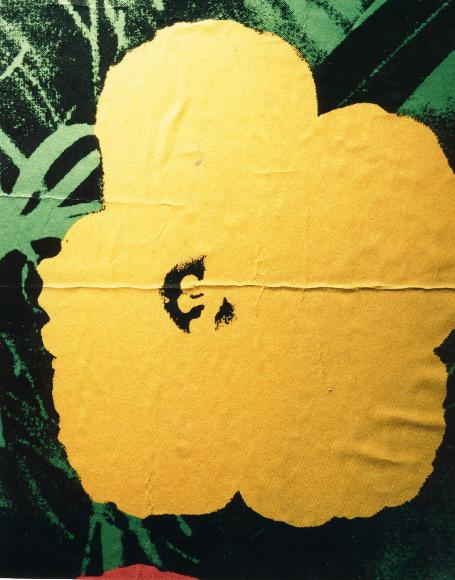
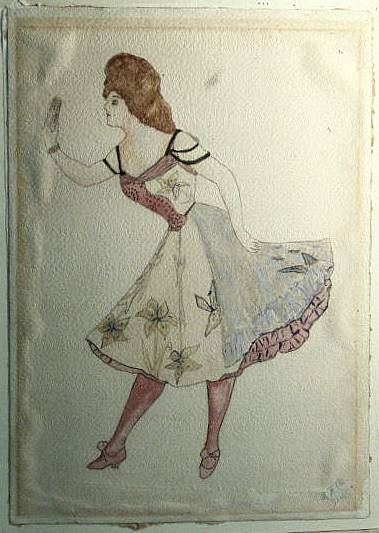
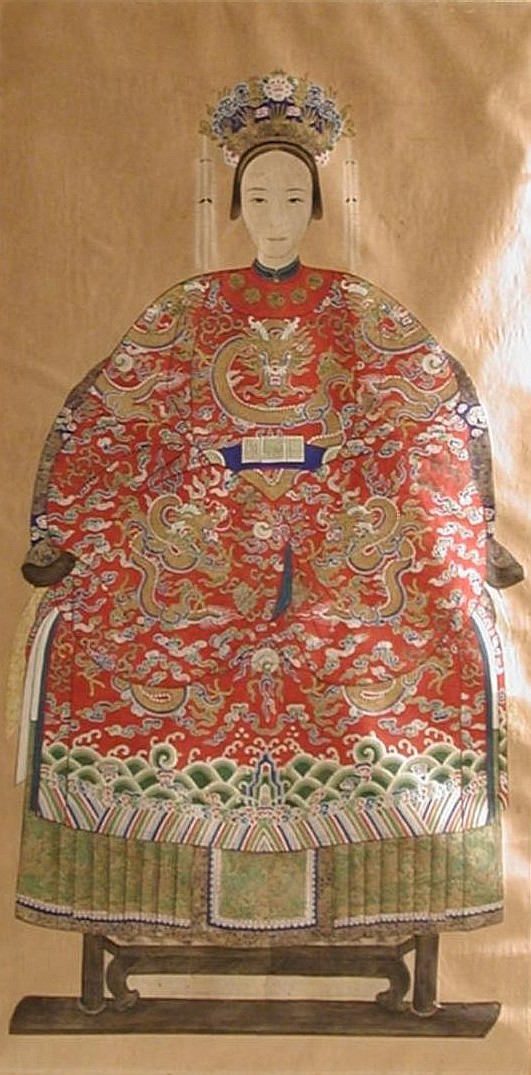
| Delamination: | Separation of the layer(s) of the support and/or media layer(s); often accompanied by flaking.
|
|
| Dimple: | Any small, hollow place. | |
| Dirt/Grime: | Dirt of any kind that has accumulated on the surface (accretion); may also be embedded into the support (soiling).
|
|
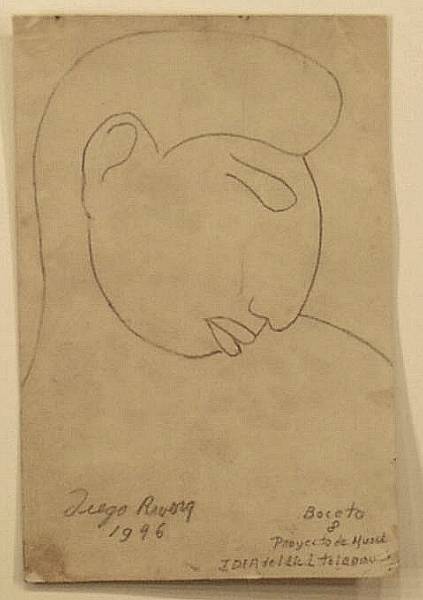
| Discoloration: | Changes of hues, often uneven and visually detrimental to the prevailing tones.
|
|
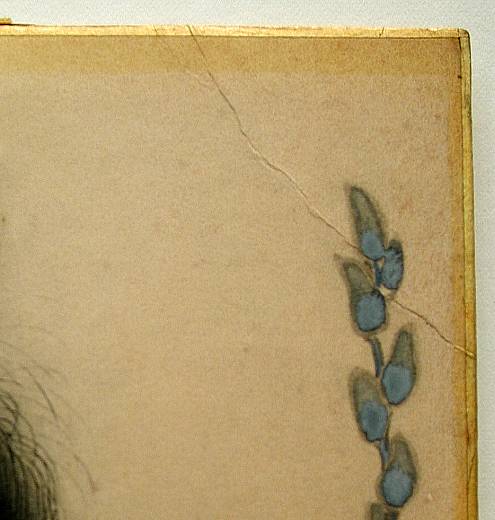
| Dog-ear: | A folded down corner.
 |
|
| Draw: | Stretch by tension.
|
|
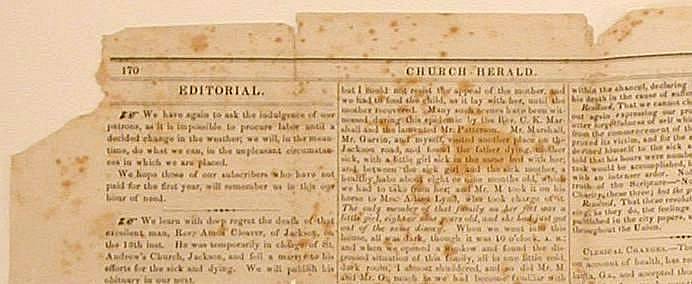
| Edge Damage: | Any damage in and confined to the edge of a sheet of paper; usually small tears.
|
|
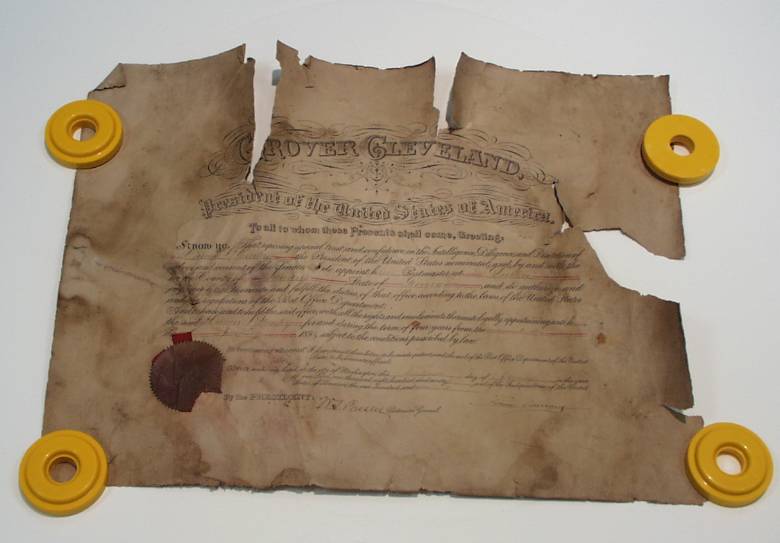
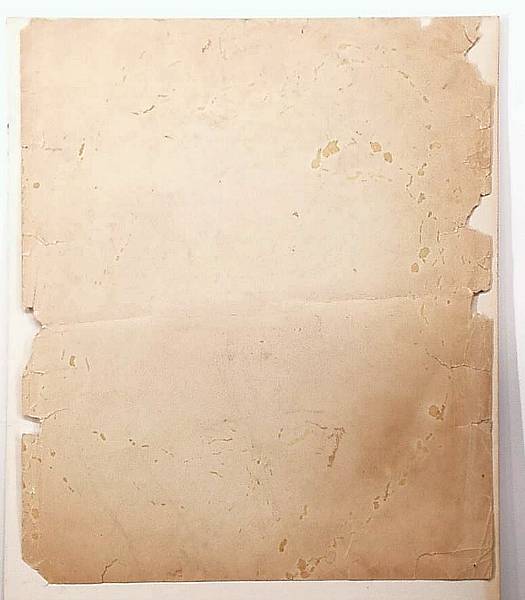
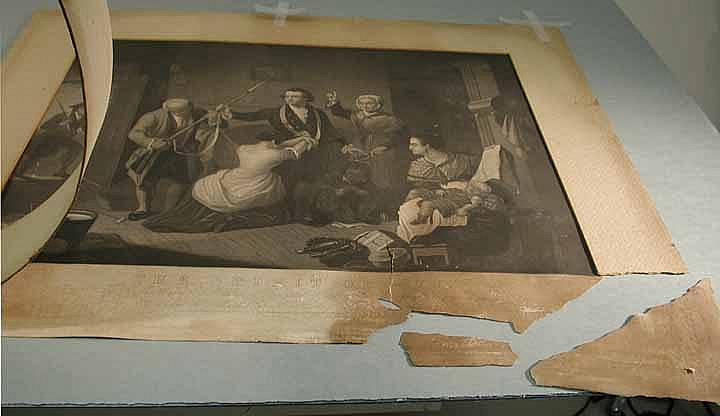
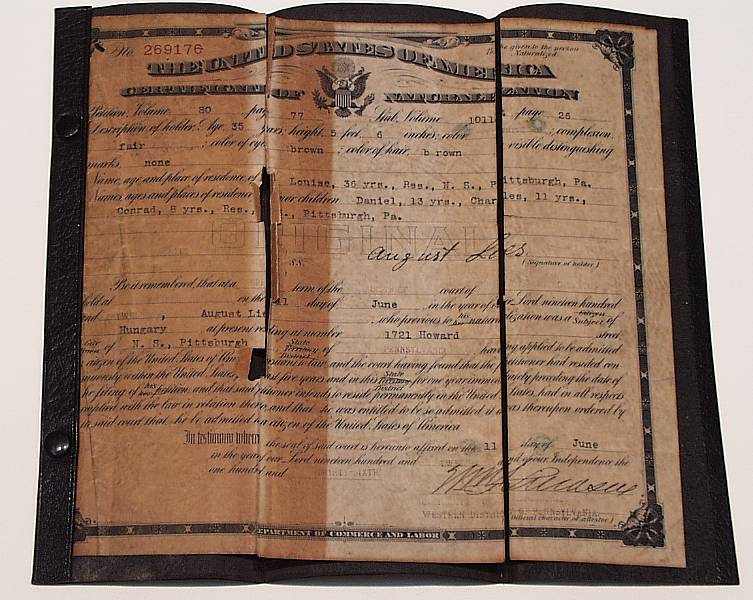
| Embrittlement: | Support has become perceptibly fragile to the point of snapping, crumbling or breaking.
|
|
| Faded: | Losses of brightness or brilliance of the color(s). | |
| Fill: | Material used to replace missing areas of loss. | |
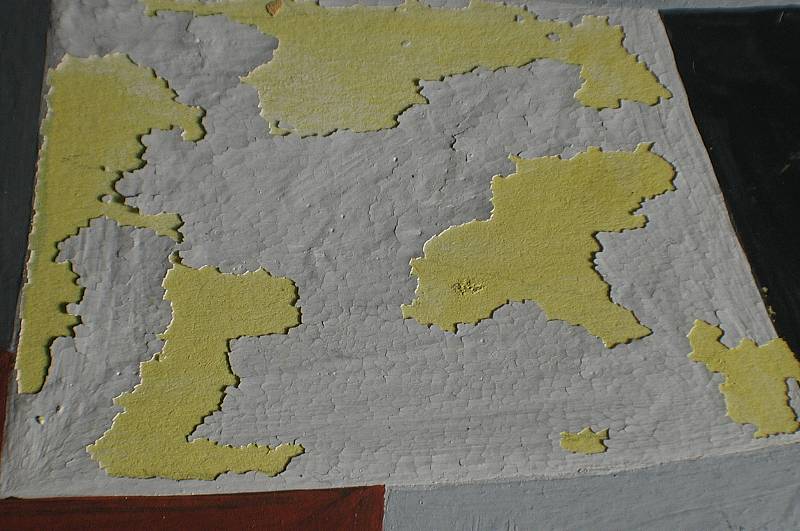
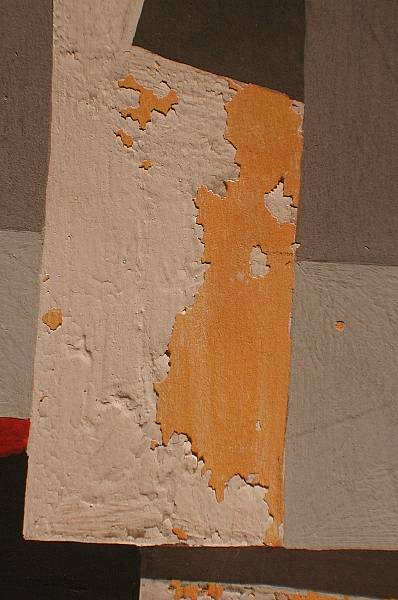
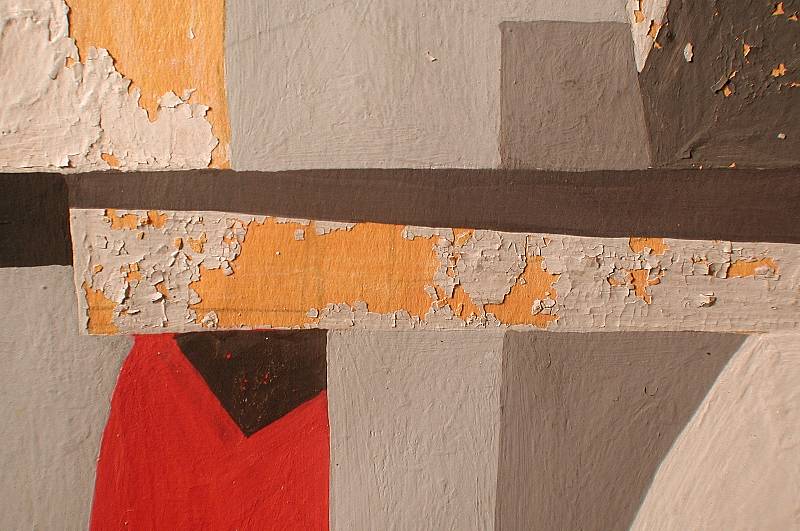
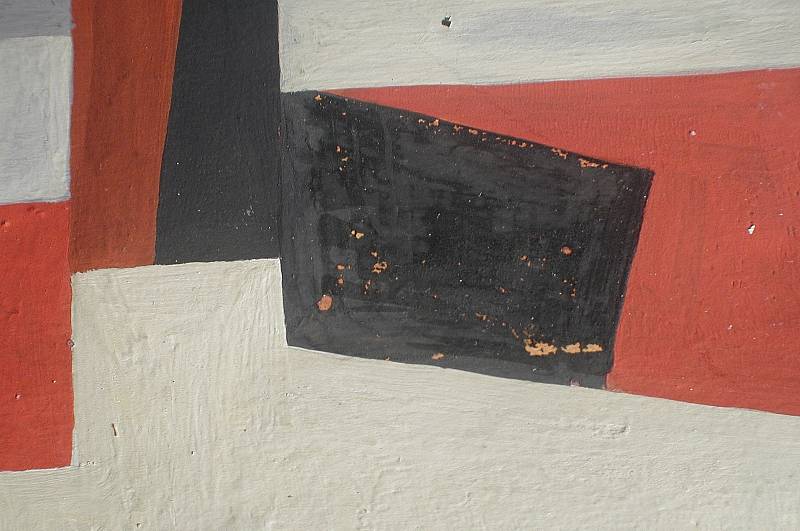
| Flaking: | Media and/or support layers to dislodging from the support.
|
|
| Flyspeck: | Small dark spots of fly excretion.
|
|
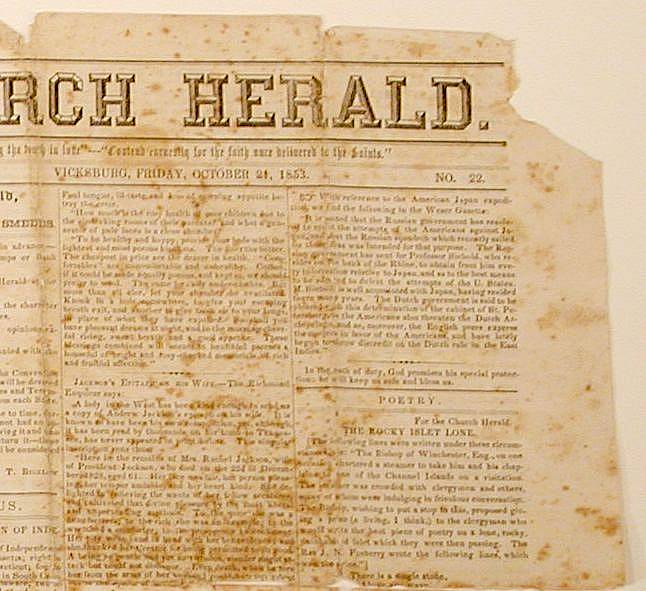
| Foxing: | Reddish-brown stains believed to be caused by metal particles in the paper being attacked by micro-organisms; foxing previously thought to be a variety of mold or mildew. | |
| Frass: | Powdery residue left by insects after attacking a sheet of paper or board. | |
| Friable: | Insufficient binding to adhere the media to the sheet or board (support). | |
| Fugitive: | Unstable colors that have or will diminish or suffuse into adjacent areas when exposed to light, moisture or solvents. | |
| Gouge: | A groove, indentation or cavity resulting from an object pressing or cutting into the surface without completely penetrating the support. | |
| Handling Dents: | Shallow creases (usually in or near the edges) created by rough handling. | |
| Hinge: | A small folded rectangle of paper with adhesive (or tape) used to mount a sheet to a support. Usually part of a mounting or matting procedure. | |
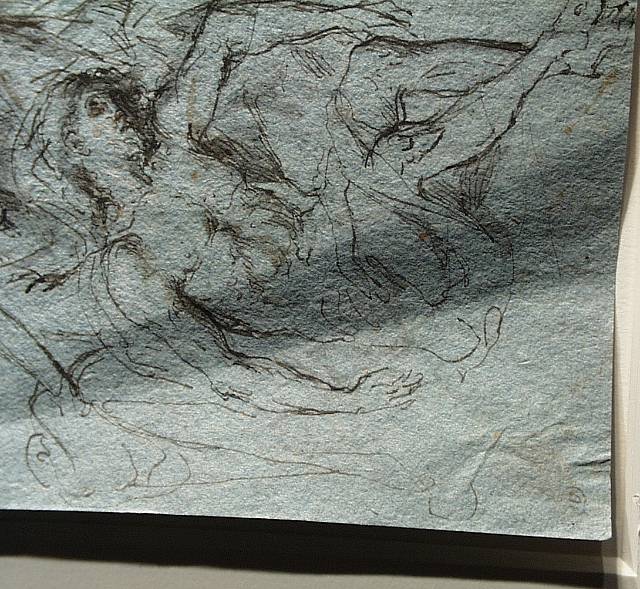
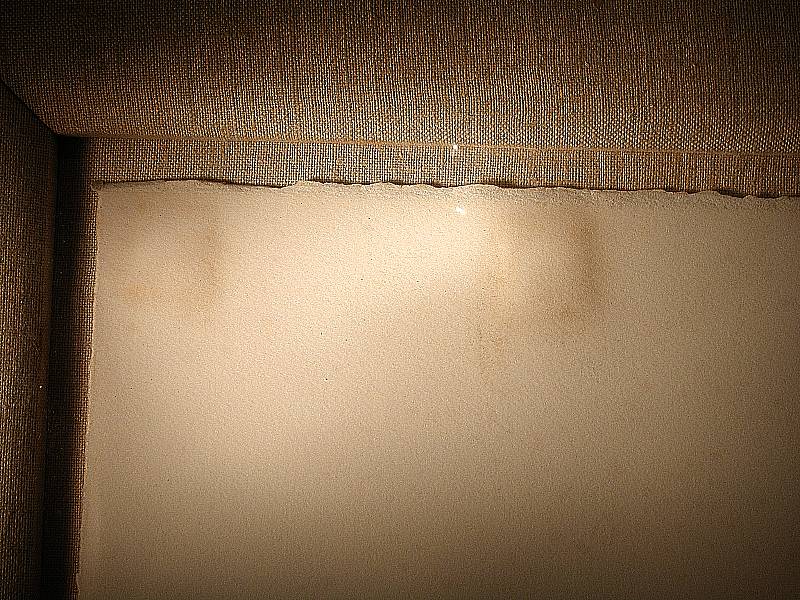
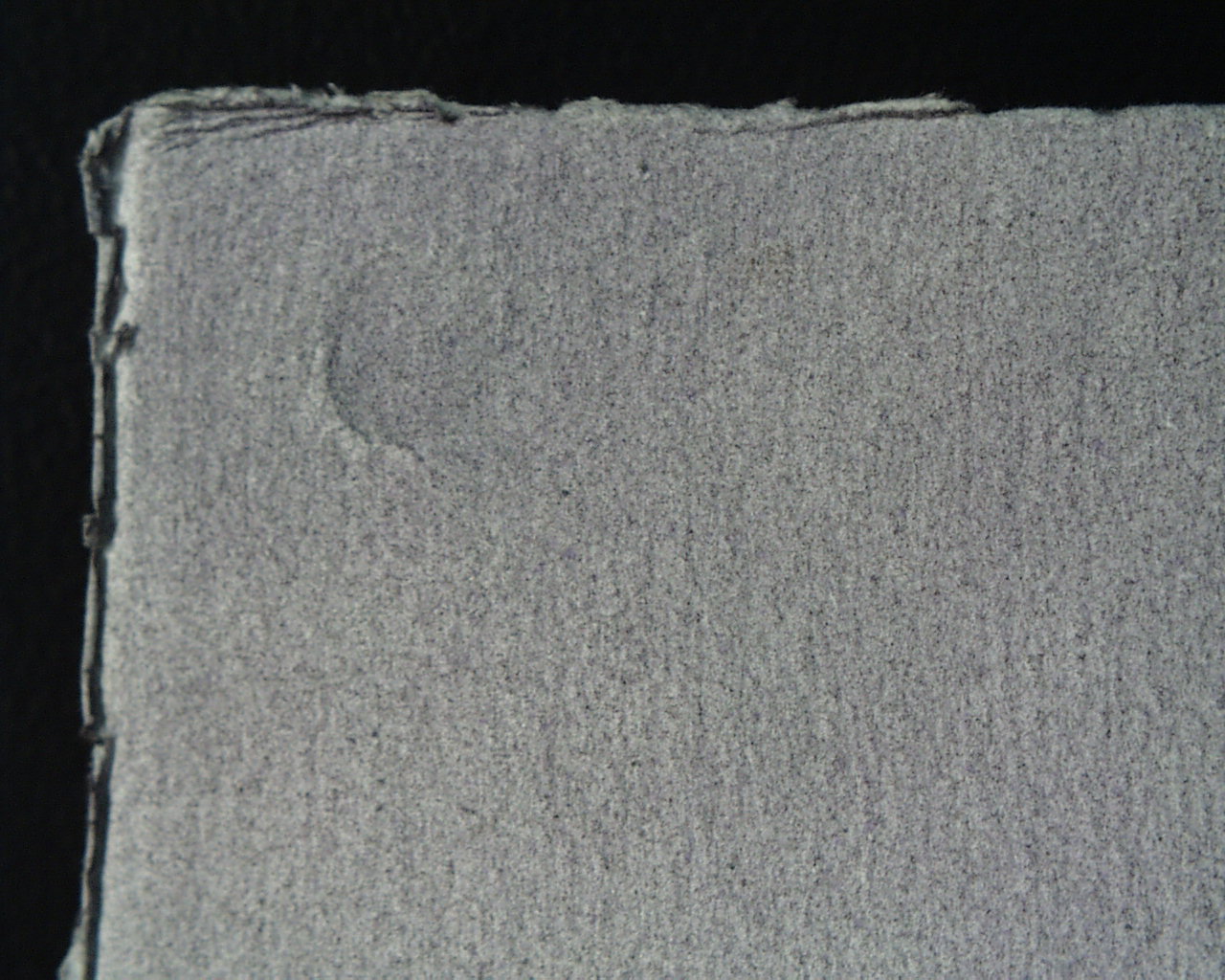
| Hinge Damage: | Damage created by improper application of hinges to a sheet. Self adhesive tapes may bleed through creating a permanent stain; excessive mounting adhesives may also create permanent compression of paper fibres.
|
|
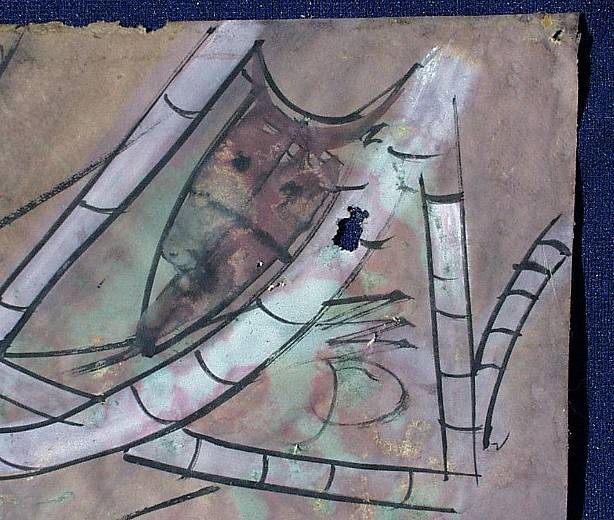
| Hole: | Open or hollow loss in the support.
 |
|
| Imbedded: | A variant of embedded. | |
| Inclusion: | A foreign body enclosed within the mass of the paper fibres. | |
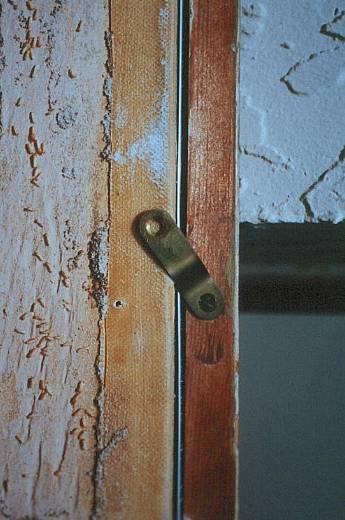
| Infestation: | Over-run and invaded; usually associated with insects, bacteria or other microorganisms such as mold, although it can also pertain to other pests.
 |
|
| Inherent Vice: | Existing condition that causes deterioration of an object as a result of its original construction. | |
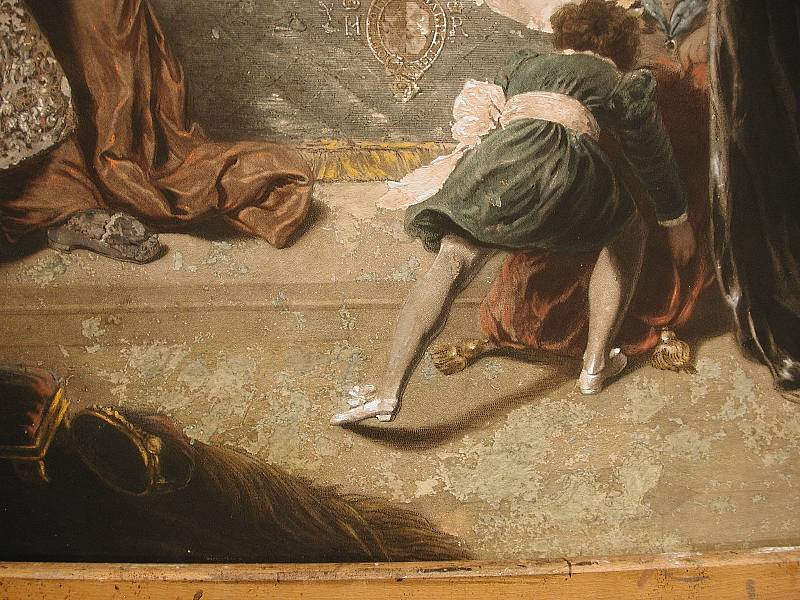
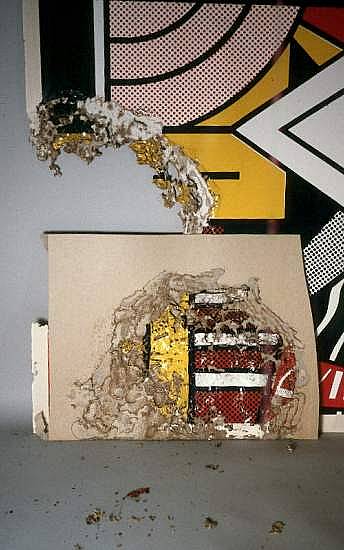
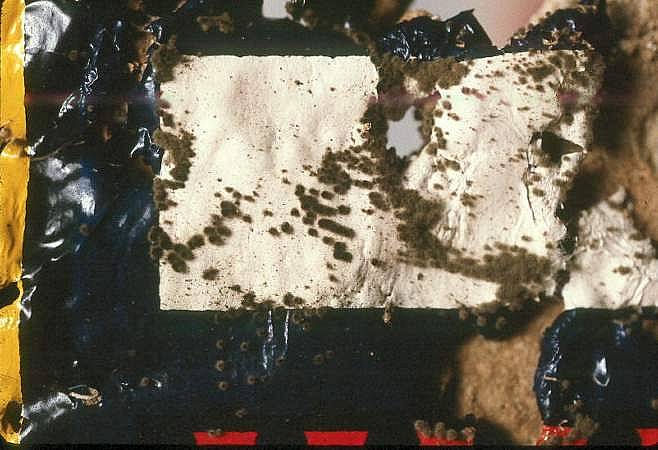
| Insect Damage: | Numerous species of insects feed upon materials in paper borne works, inflicting damage which can be massive, resulting in partial or total destruction.
|
|
| Insecure: | A damaged work which maybe in the process of deterioration due to weakening of materials or due to weakness in structure or construction; work will probably sustain further damage if moved or handled without immediate attention. | |
| Liquid Stain: | Stain created by an unidentified liquid. | |
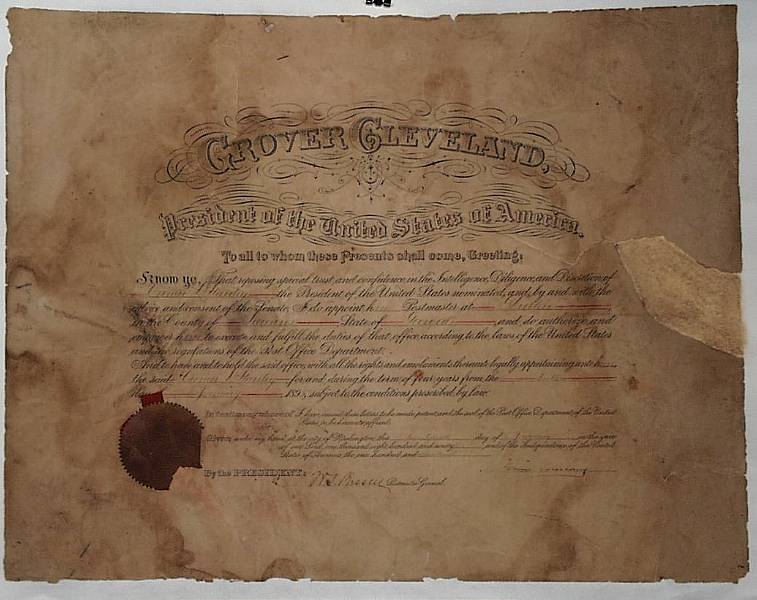
| Loss: | >Missing area in one or more layers of image; most frequently the result of flaking, abrasion, tearing, skinning, insect attack, etc.
|
|
| Loss Compensation: | Replacing loss areas (holes, etc.) with material not original to the work.
 |
|
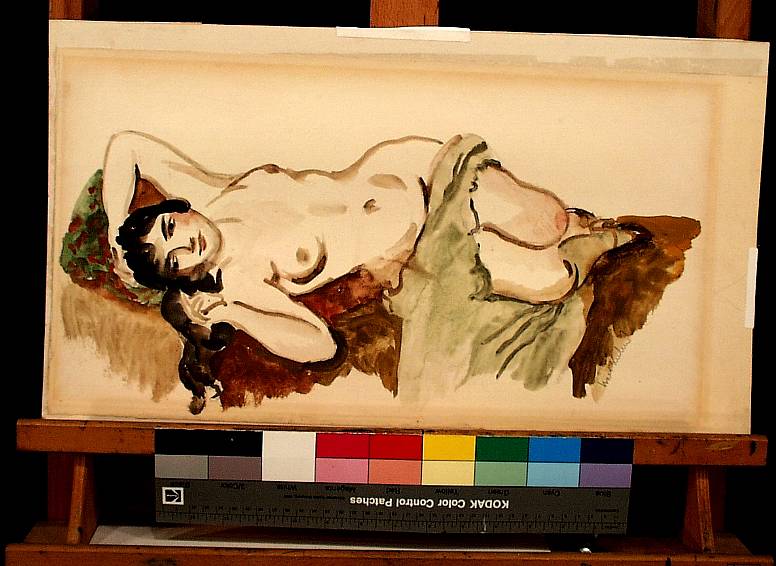
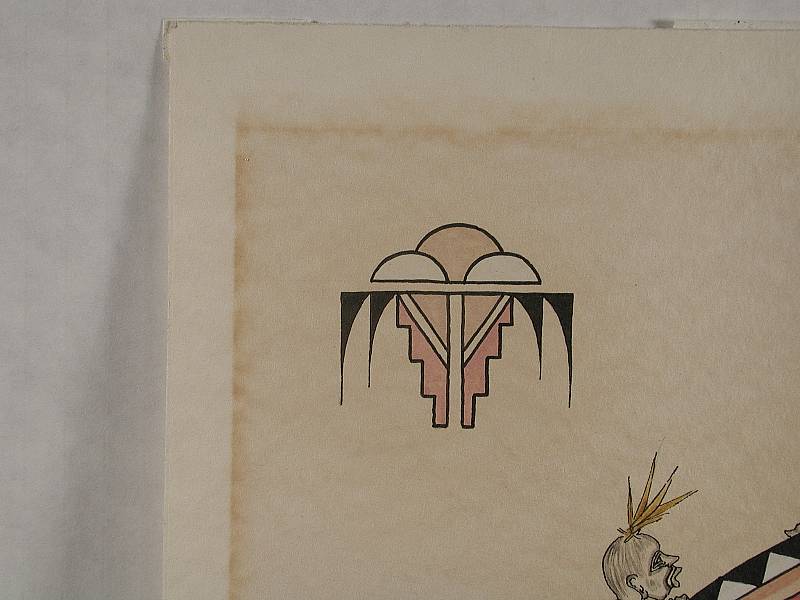
| Mat Stain or Matburn: | Darkened area caused by acidic conditions related to the use of improper matting materials. See “Acidic Mat”.
|
|
| Mend: | Reattach or reinforce cuts, tears, etc. | |
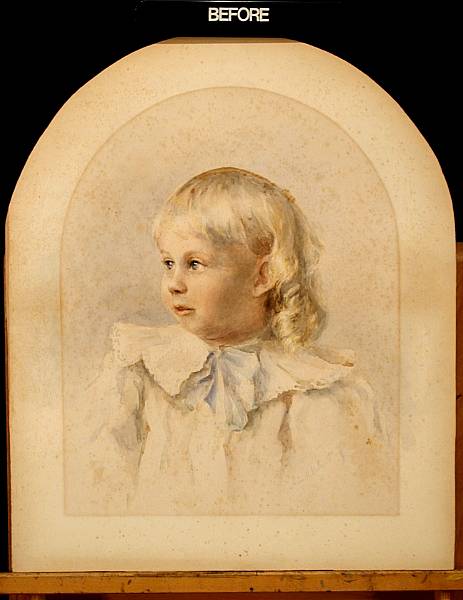
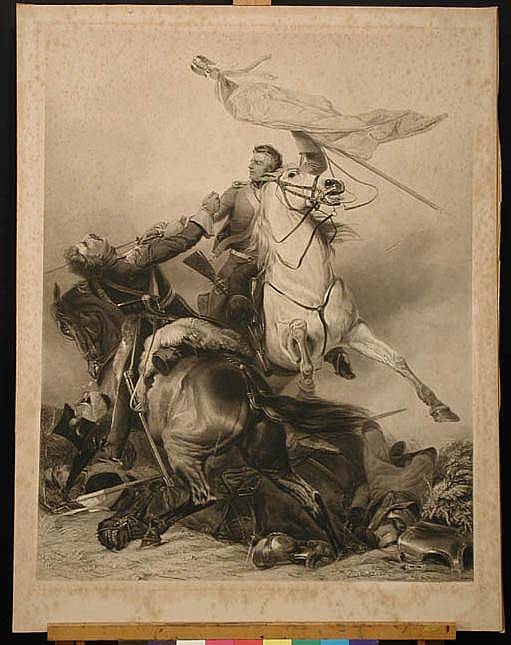
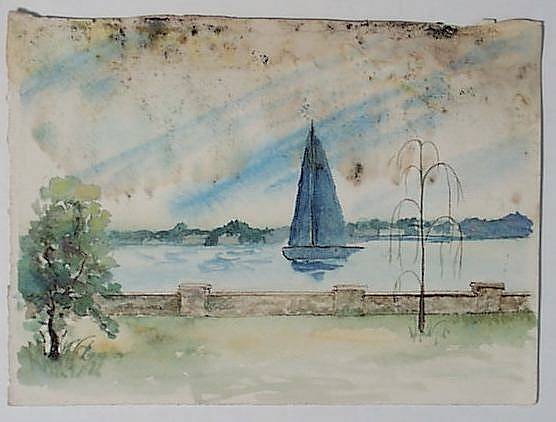
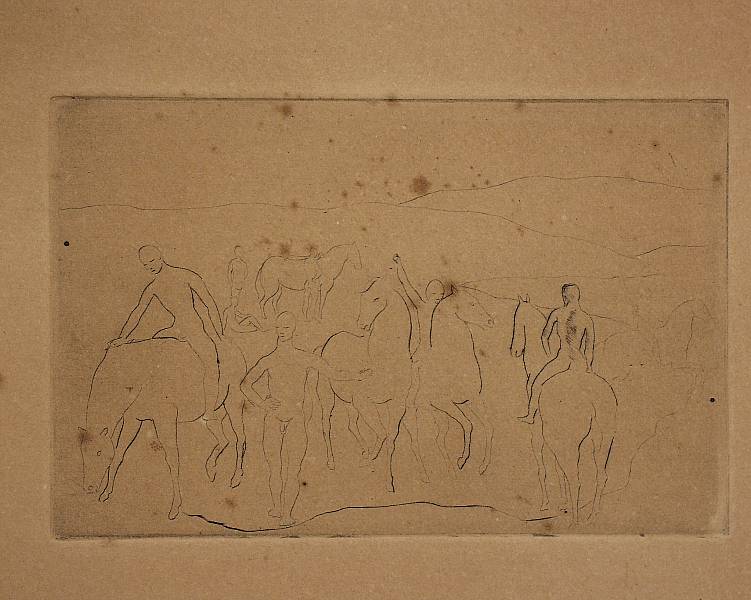
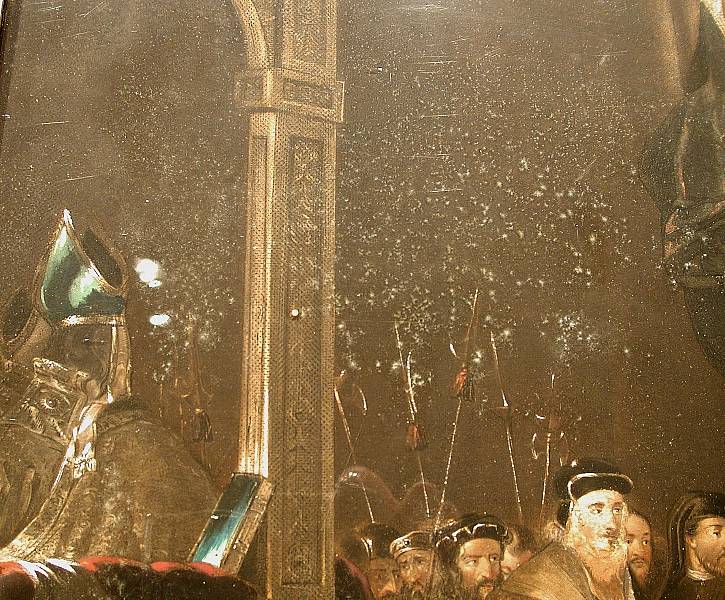
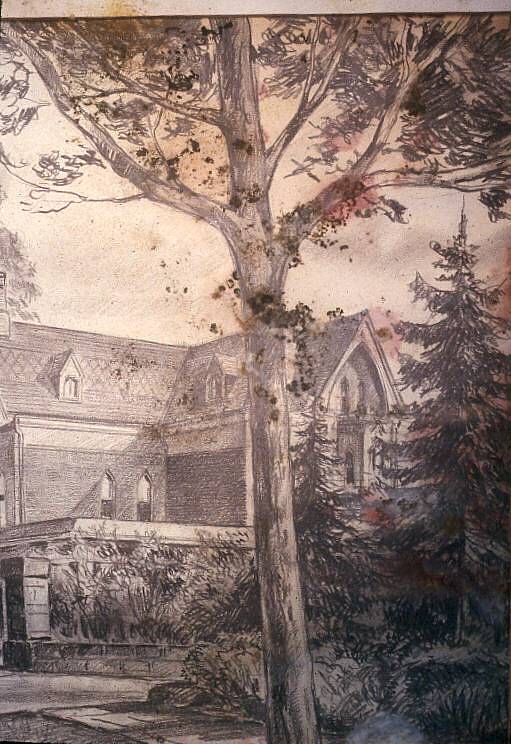
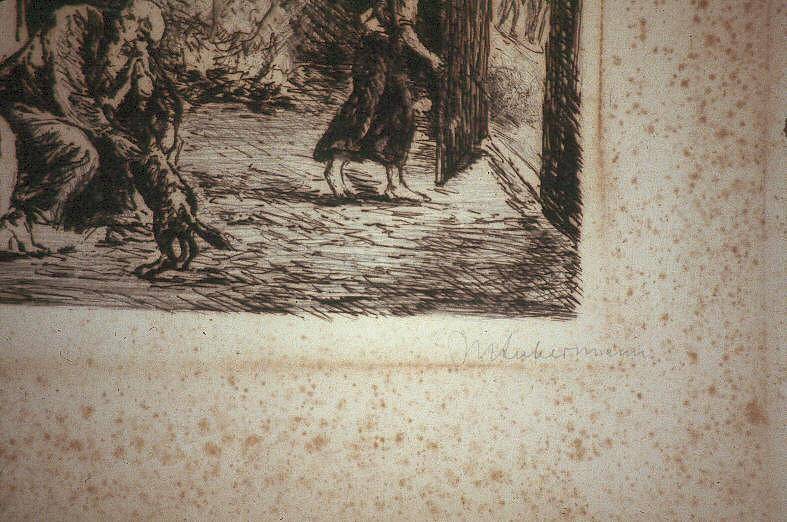
| Mold/Mildew: | Any of various fungi growths that invade many organic surfaces provided sufficient moisture is present, producing enzymes that dissolve, stain, or degrade the host material.
|
|
| Offset: | Planographic printing using indirect image through such as photomechanical plates. | |
| Photo Oxidation: | Degradation of paper and/or media by light. In media this results in fading; in paper it results in destruction of the molecular structure of the cellulose paper fibre and can result, in extreme cases, in the total collapse and loss of the sheet. | |
| Physical Degradation: | Degeneration of the overall structure. | |
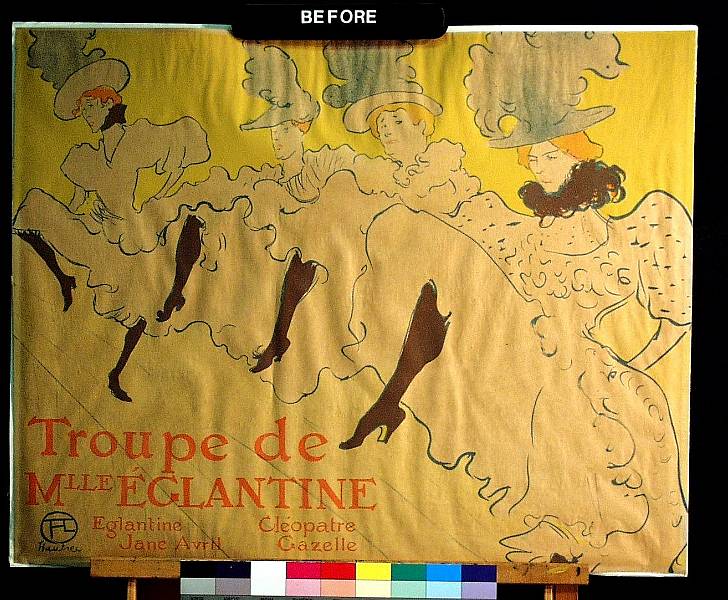
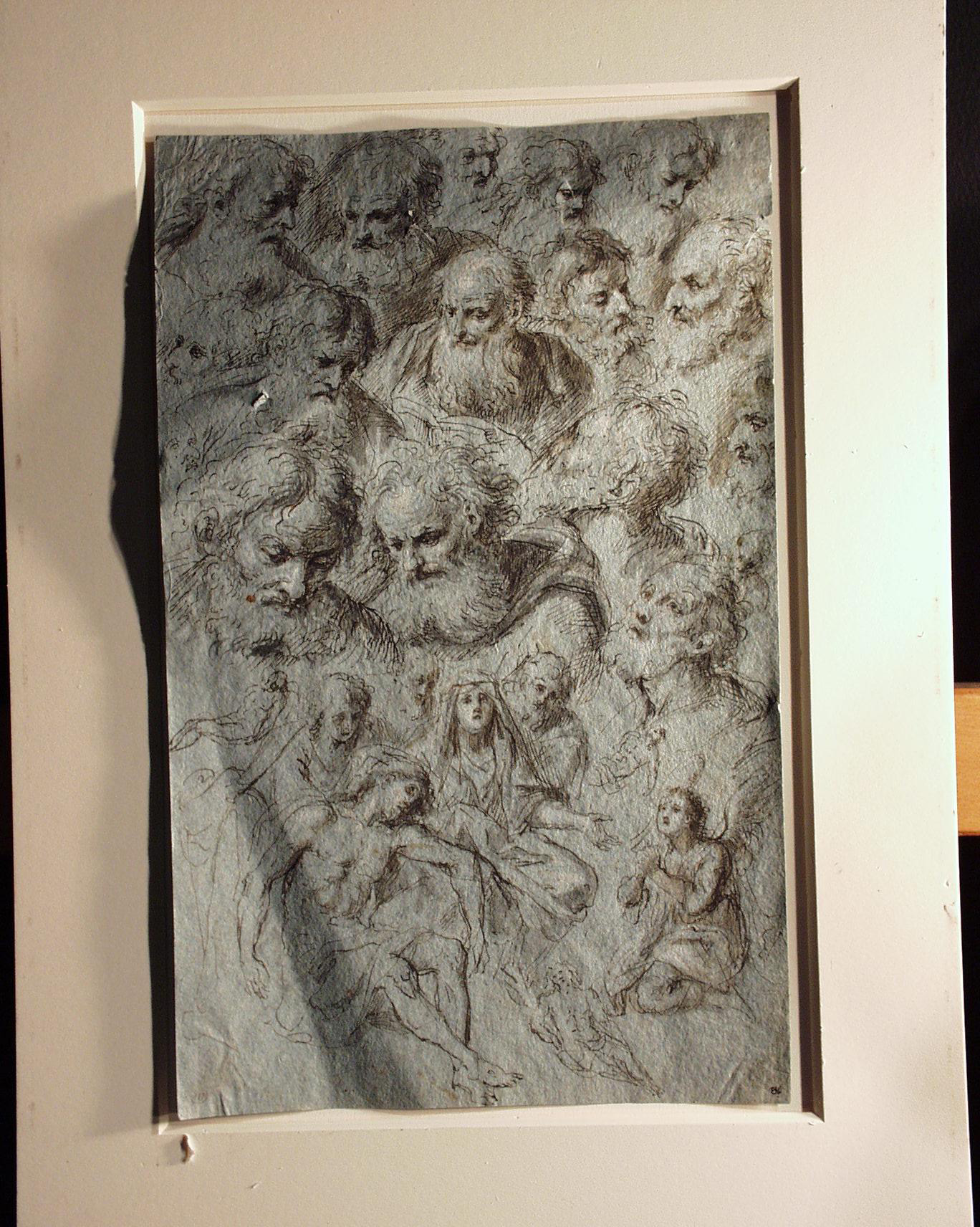
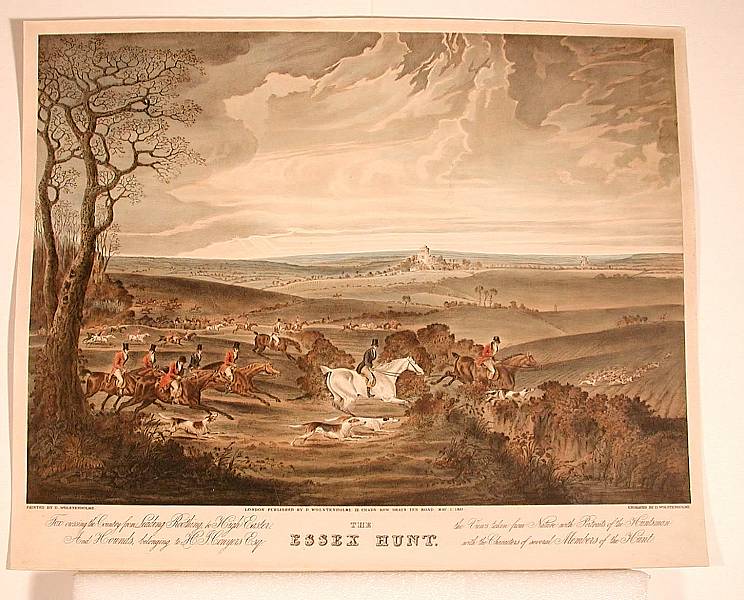
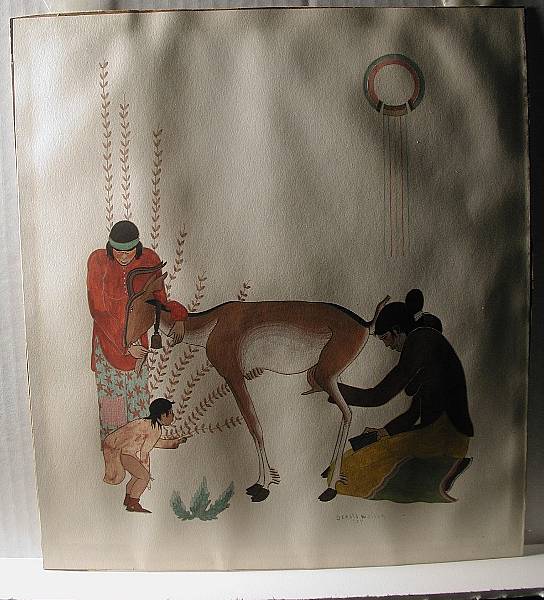
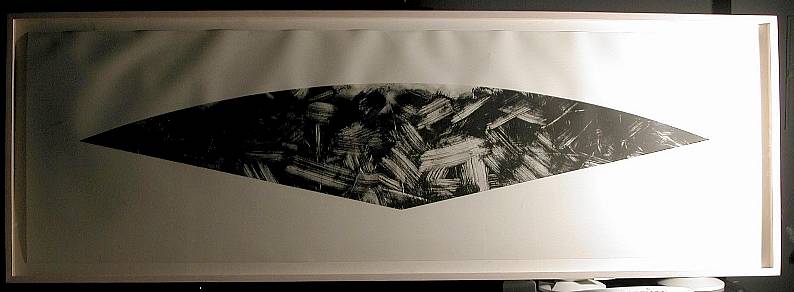
| Planar Deformation: | Structural deformation of the support whereby it is no longer flat or in place. (See Cockling and Buckling).
|
|
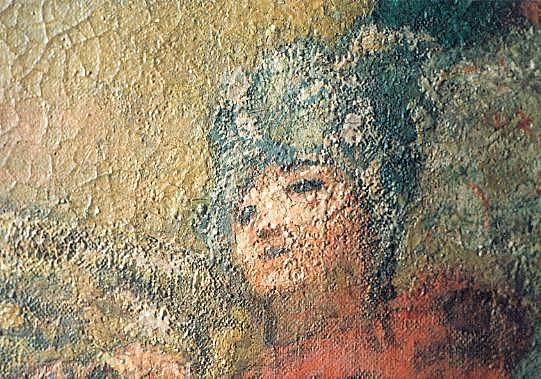
| Powdering: | Insufficient binding media or failure of the binding media to adhere pigments to the support causing the media to become powdery, chalky or crumbly.
 |
|
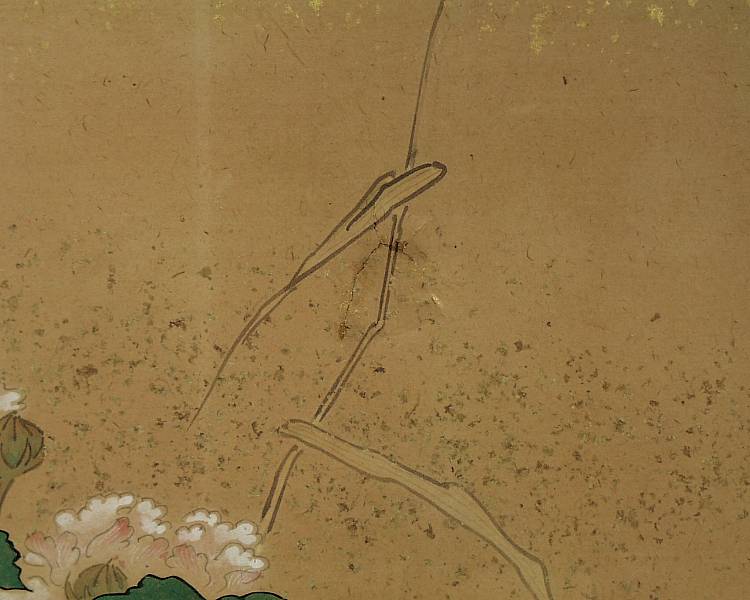
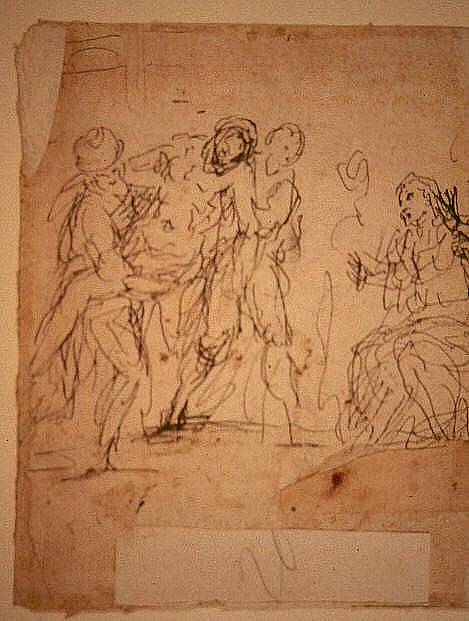
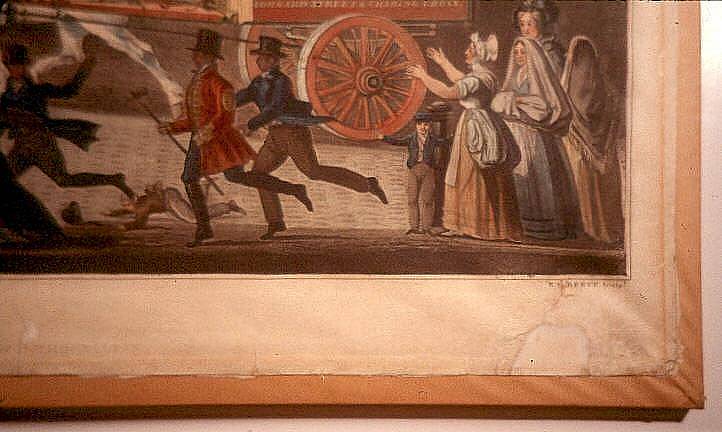
| Previous Restoration: | A restoration performed prior to the current examination.
|
|
| Primary Support: | >Material providing the foundation for the image. i.e. paper, vellum, etc.; called the “primary support,” when a secondary support is present. | |
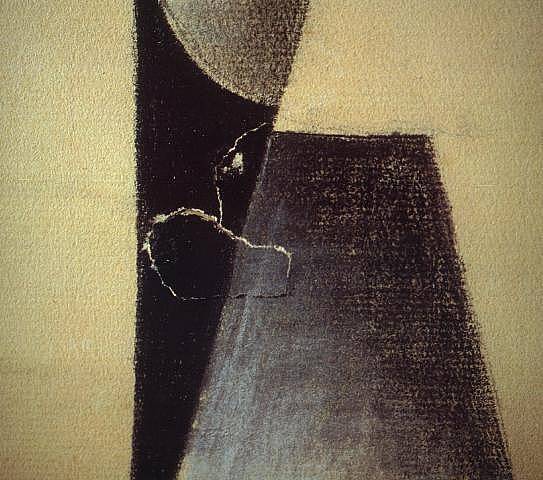
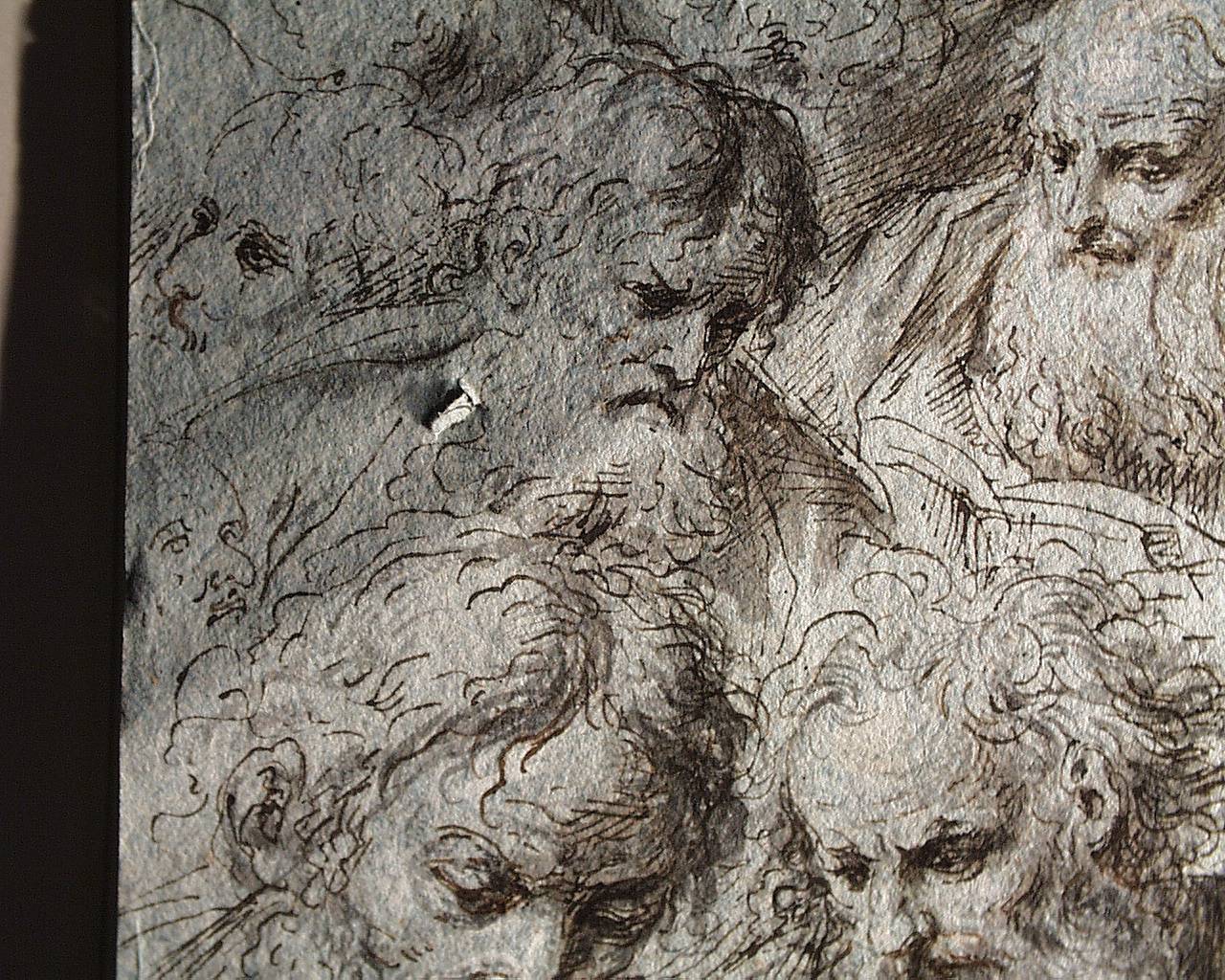
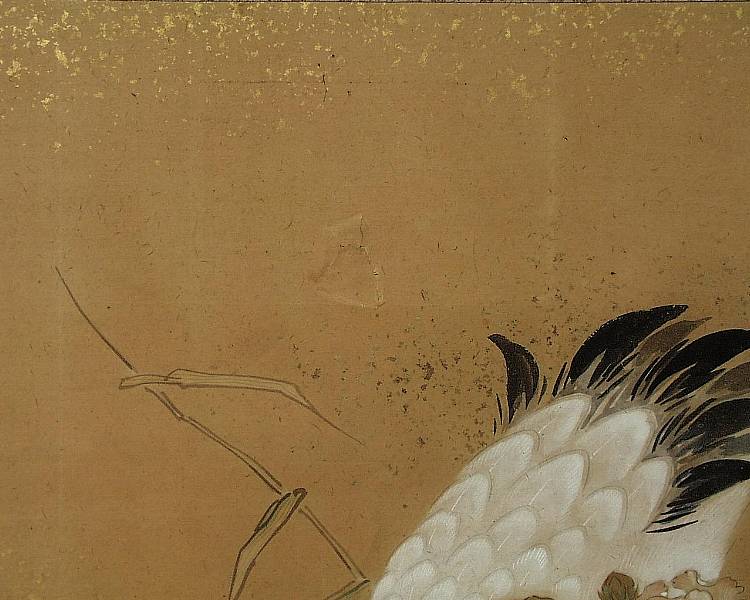
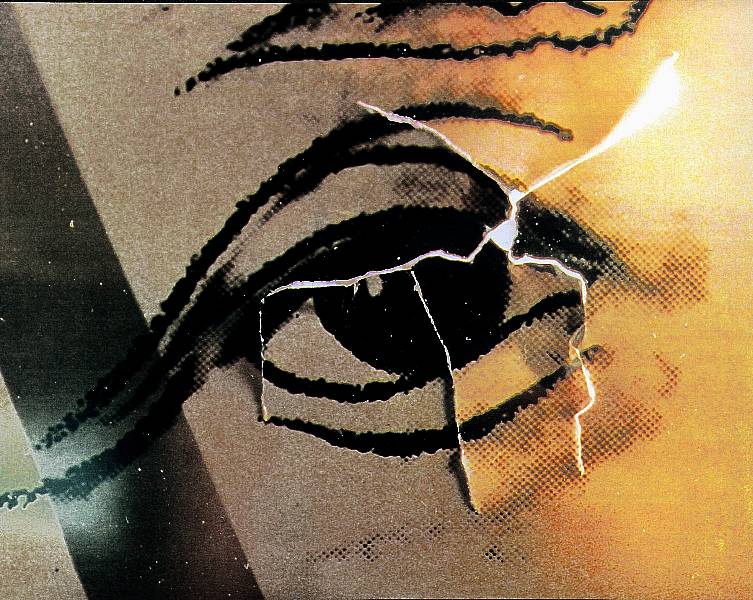
| Puncture: | Hole created by impact.
|
|
| Scratch: | Loss in the media, which may extend into the support caused by marking the surface with something sharp. | |
| Secondary Support: | Backing, backboard, mounting support or other material providing a foundation layer for the primary support.
|
|
| Sheet: | A broad, thin, usually rectangular piece of paper serving as a support for media; drawings, watercolors, etc. are referred to by collectors as “sheet(s)” | |
| Shellmark: | Crease in the pattern of a half circle; generally the result of a blow or impact when the object is rolled. | |
| Skinning: | Excessive intervention resulting in losses of the original media; also called “over-cleaning” or “excessive cleaning”. | |
| Smudge: | Smear or blur caused by dirt, soot or ink. | |
| Soiling: | Dirt driven deep into the surface. | |
| Split: | A rupture or tear running along the support, usually caused by stress. | |
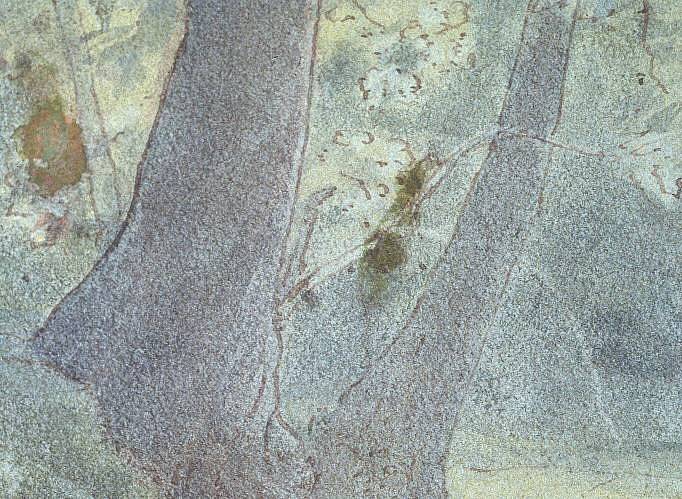
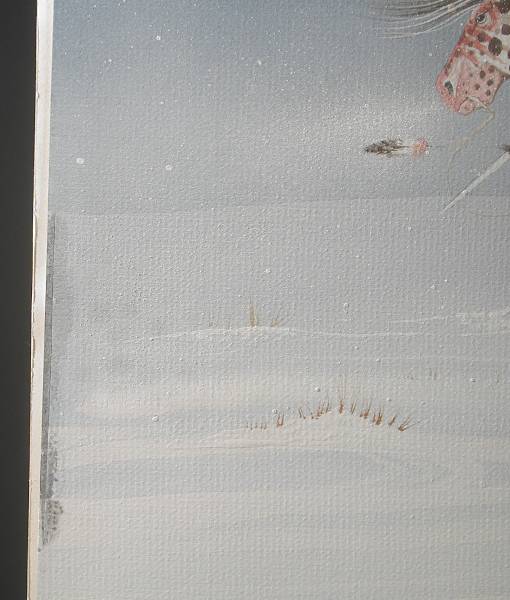
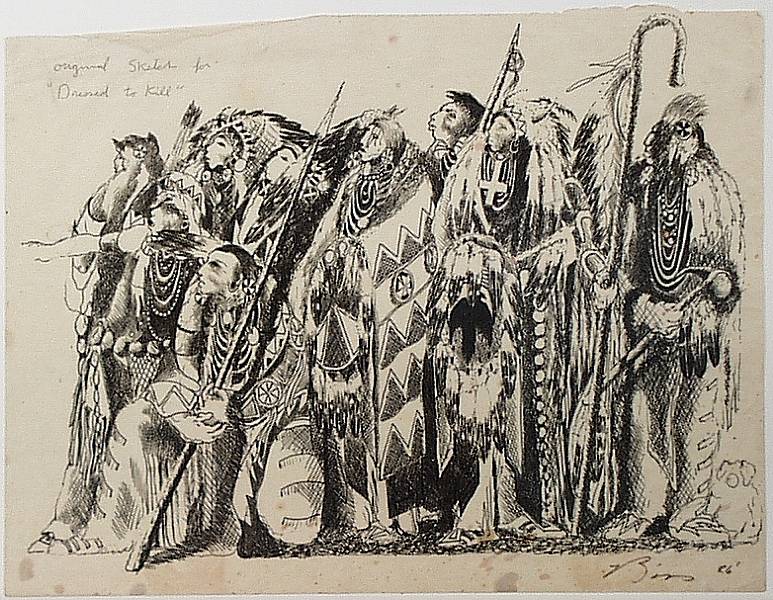
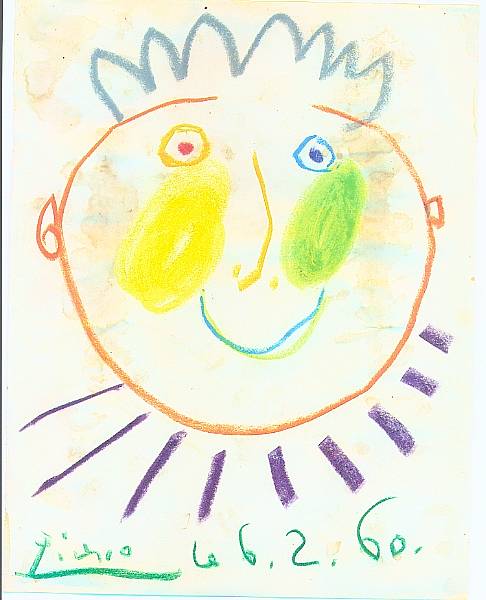
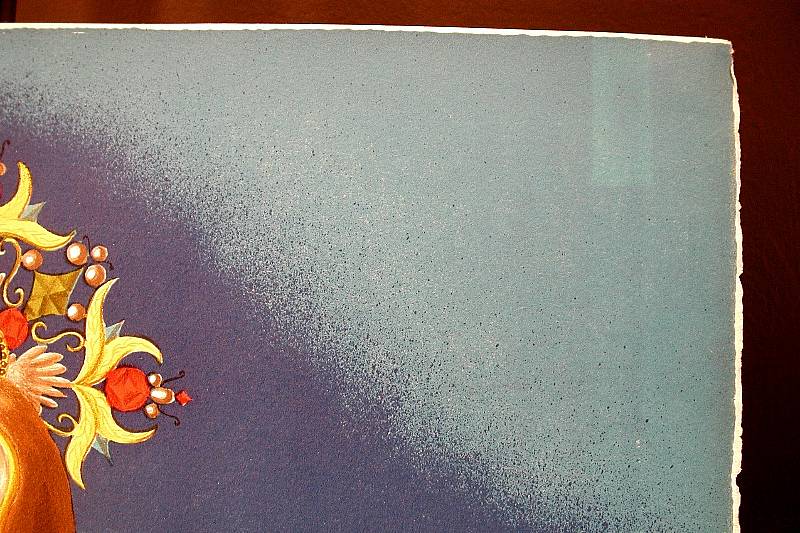
| Stain: | A discoloration, usually darkening where the media and/or support layer has been penetrated.
       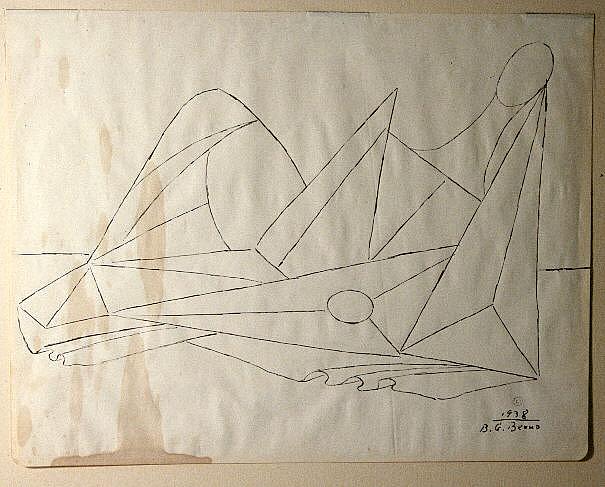
|
|
| Stain Reduction: | Diminishing or removing discoloration.
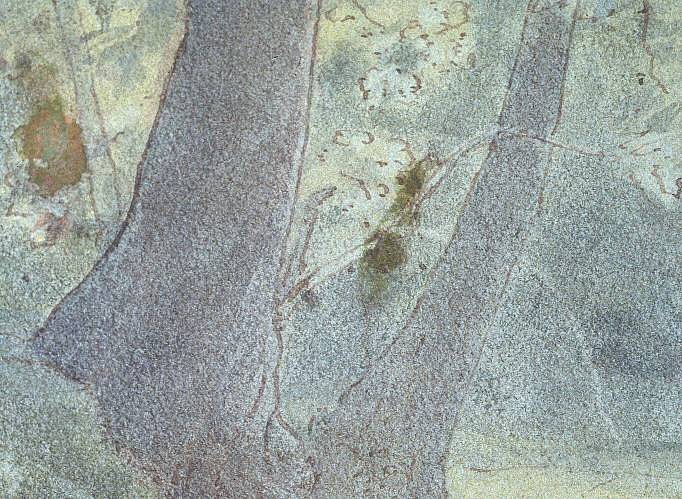 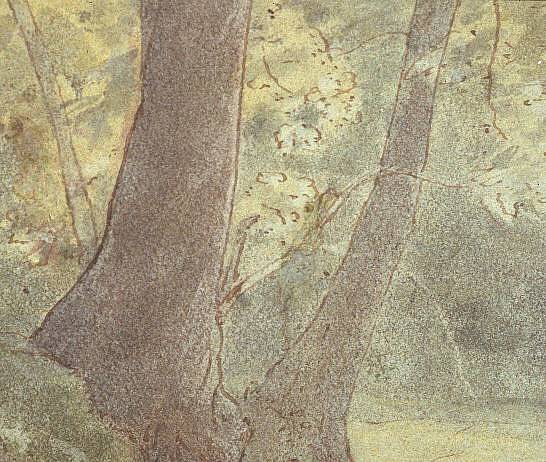
|
|
| Support: | Material providing the foundation for the image. i.e. paper, vellum, etc.; also, called the “primary support,” when a secondary support is present. | |
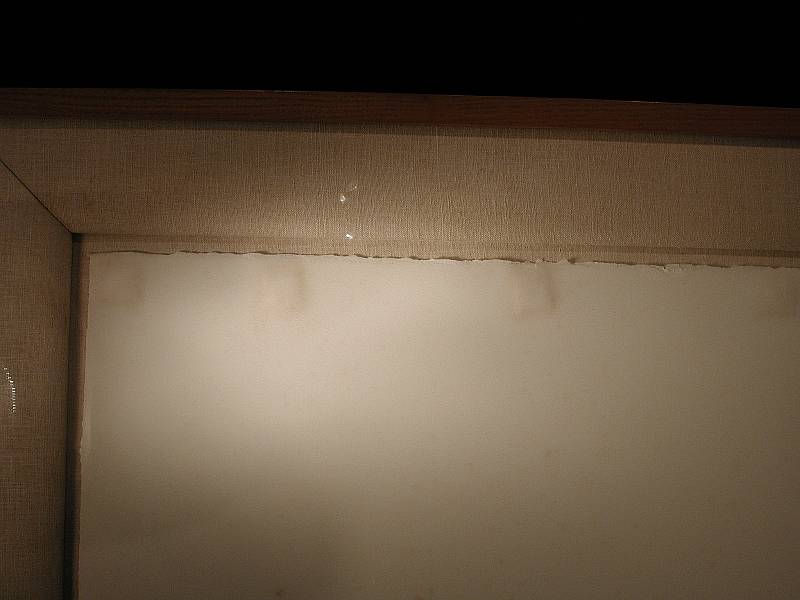
| Tape Stain: | Staining caused by migration of the adhesive from self-adhesive tape into paper fibres.
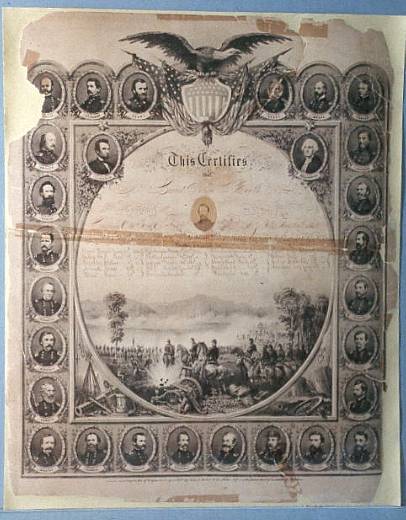 |
|
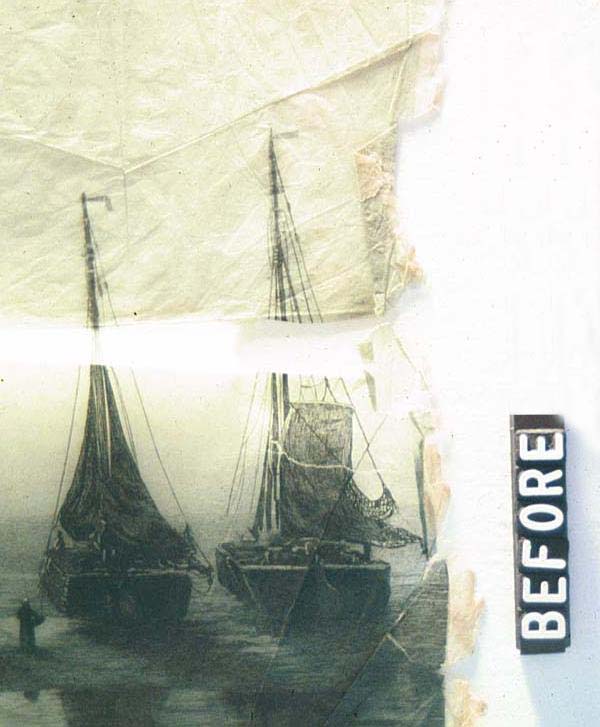
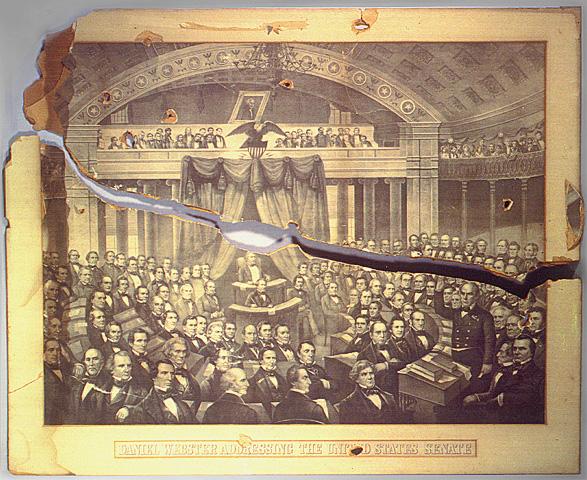
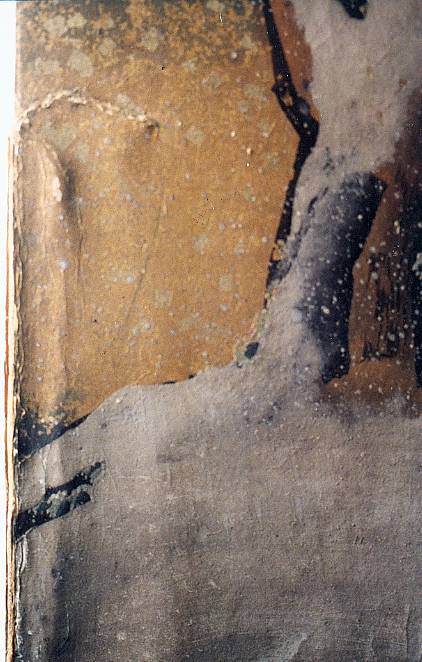
| Tear: | A rupture in the support layer as a result of tension.
|
|
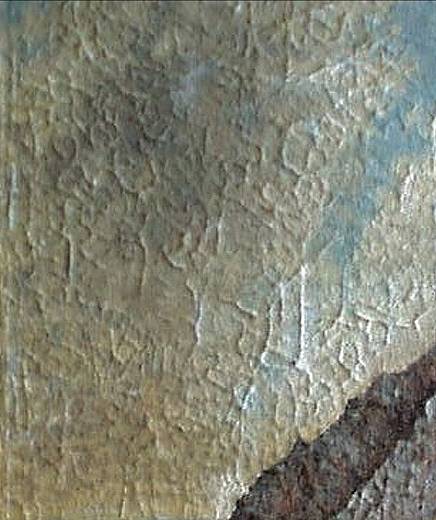
| Tenting: | Delaminating of paint or gouache along cracks where the delaminated media layers lift upward into a pattern resembling the peaked tops of tents.
 |
|
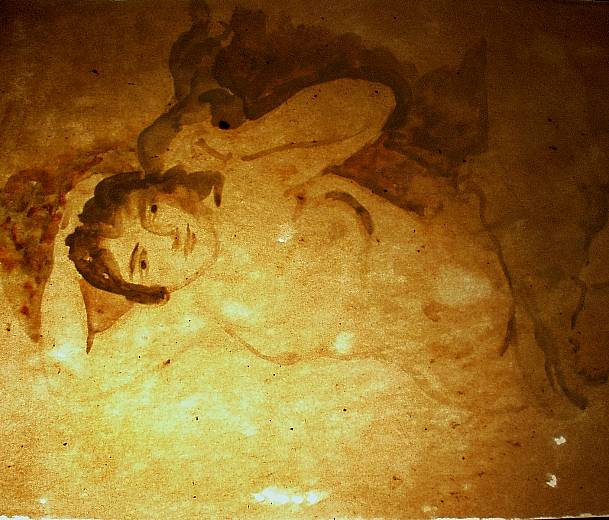
| Thinning: | Abrasion of paper or board support creating areas which are thinner than the surrounding support.
 |
|
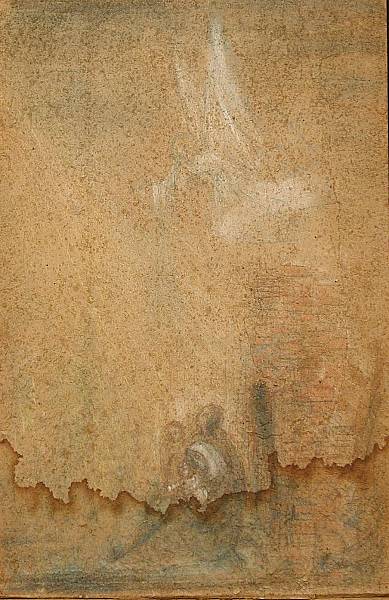
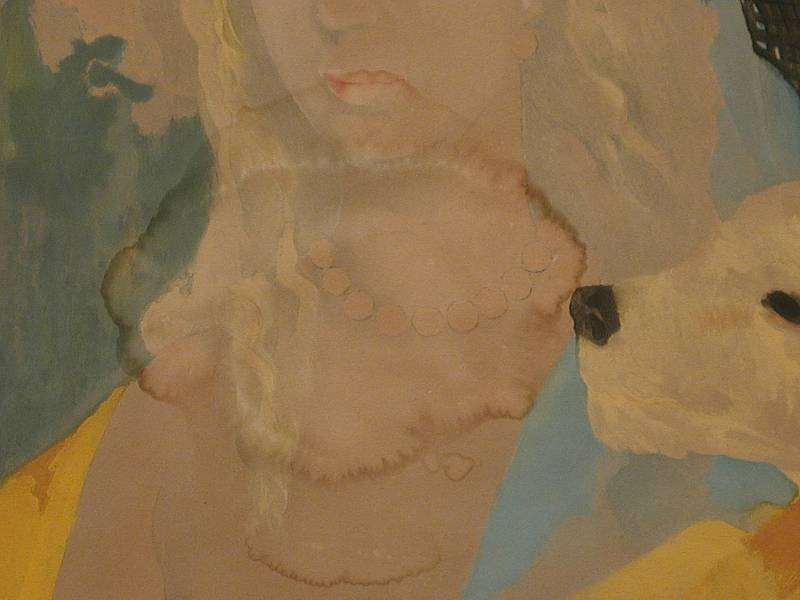
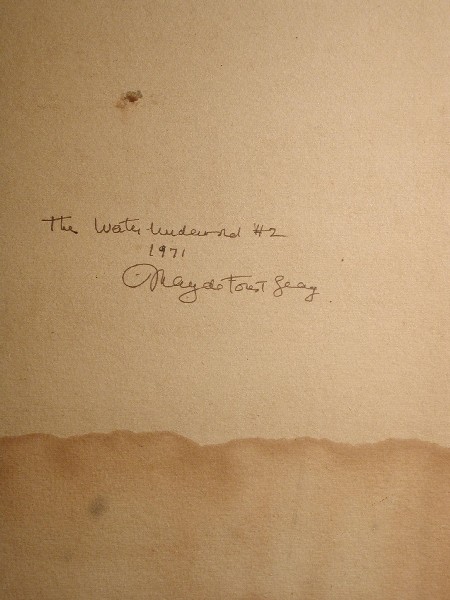
| Tideline: | The dark line created by drying liquid, at the farthest point of liquid migration in the paper or board. The line itself is dirt transported by the liquid; the dirt embeds itself deeply into the paper fibres becoming tenacious and difficult to remove.
|
Degree:
The comparative extent of damage described by the following adjectives:
Negligible:
Insignificant damage that may not need immediate attention but needs to be monitored.
Slight:
Damage slightly more noticeable than “negligible”; should be monitored by a conservator.
Minor:
Existing condition, which is relatively unimportant; generally does not involve risk of loss; should be monitored by a conservator.
Moderate:
Damage is noticeable and may be of middle or increasing severity of size; not serious but should be monitored or corrected by a conservator.
Marked:
Readily identified damage, often with distinctive features and requires remediation by a conservator.
Major:
Damages or existing condition are noticeable, if not conspicuous in extent; stability of the work is in question, often great risk is a factor. Requires immediate attention by a conservator to prevent further damage or loss.
Extreme:
Most severe damage or existing condition has become very advanced. The work is insecure, no longer stable and at great risk.
It is important to understand that damage to a work of art is rarely static and the work will continue to deteriorate. It is best to have a conservator monitor works annually.